Key Points
- Bledisloe Cup Series Sweep:The New Zealand All Blacks defeated the Australian Wallabies 43-21 at Accor Stadium in Sydney on Saturday, 17 October 2026, completing a clean sweep of the two-Test Bledisloe Cup series and extending their unbeaten streak against Australia to 13 consecutive Test matches.
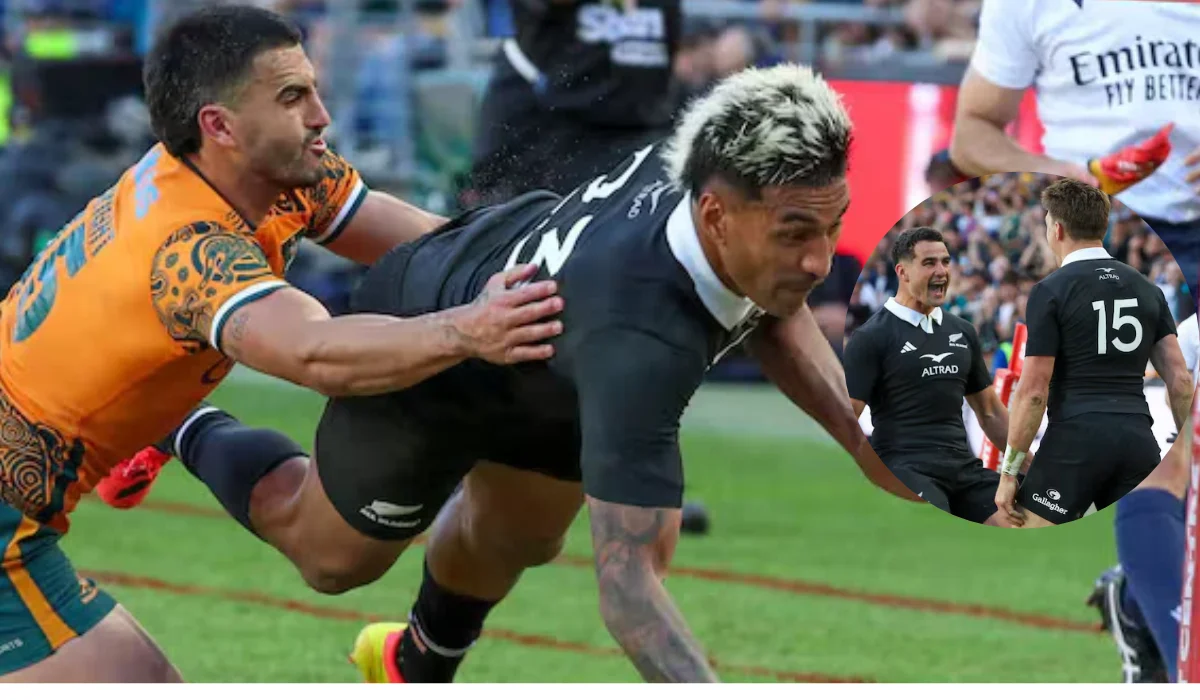
- Explosive Six-Try First Half:New Zealand established a dominant 36-7 lead by half-time, scoring six tries in the opening 40 minutes through Josh Moorby, Beauden Barrett (two), Peter Lakai, Rieko Ioane, and Wallace Sititi.
- Early Injury Disruptions:All Blacks centre Quinn Tupaea was forced off in the second minute due to a head collision with the turf and subsequently failed his Head Injury Assessment (HIA), bringing Rieko Ioane onto the field earlier than anticipated.Inside centre Jordie Barrett was a late withdrawal prior to kick-off due to a tight calf muscle.
- Second-Half Resurgence from Australia:The Wallabies won the second half 14-7, scoring through winger Tom Wright and replacement Filipo Daugunu, following an earlier first-half try by lock Jeremy Williams.
- Disciplined Sanctions and Injuries: Wallabies lock Jeremy Williams was sent to the sin bin in the 31st minute for offside play. All Blacks substitute hooker Samisoni Taukei’aho suffered an injury late in the match, while debutant winger Chay Fihaki received a yellow card for a head-on-head tackle on Joseph-Aukuso Suaalii, forcing New Zealand to finish the match with 13 players.
- Forwarding to Northern Tour: The Test represented the All Blacks’ final match before embarking on their end-of-year Northern Tour, which begins against Scotland at Murrayfield on 8 November 2026.
Sydney (Sydney Now Magazine) October 17, 2026 – Executive Summary: The New Zealand All Blacks extended their winning streak over the Australian Wallabies to 13 Test matches after securing a 43-21 victory at Accor Stadium in Sydney to complete a 2026 Bledisloe Cup series sweep.A relentless six-try first-half performance propelled New Zealand to a 36-7 lead by half-time, effectively putting the contest out of reach despite an improved second-half effort from the hosts.Despite losing players to injuries and late disciplinary sanctions that reduced them to 13 men, the All Blacks retained the Bledisloe Cup for a 24th consecutive year ahead of their upcoming Northern Tour.
- Key Points
- How Did the All Blacks Control the Explosive Opening Half in Sydney?
- How Did the Wallabies Respond Before Being Subdued by First-Half Turnovers?
- What Unfolded During the Second Half as Injuries and Cards Reduced New Zealand’s Numbers?
- Background of the Bledisloe Cup Rivalry and Trans-Tasman Dominance
- How This Result May Affect the All Blacks and Wallabies Heading into November
How Did the All Blacks Control the Explosive Opening Half in Sydney?
New Zealand signaled their intentions from the opening whistle, overcoming pre-match squad adjustments to establish immediate territory and ball control in Sydney. The All Blacks were forced to adjust their tactical midfield structure prior to kick-off after regular inside centre Jordie Barrett was withdrawn from the squad due to a tight calf muscle, granting Timoci Tavatavanawai his first Test start of the calendar year.
The match suffered an immediate stoppage in the second minute when All Blacks centre Quinn Tupaea sustained a severe impact to the head during a ground collision following a tackle.As reported by Talking Rugby Union, Tupaea was forced off the field for a medical evaluation and subsequently failed his Head Injury Assessment (HIA), prompting substitute centre Rieko Ioane to enter the action much earlier than planned.
Despite the early structural disruption, New Zealand’s forward pack maintained patience during their initial attack inside the Wallabies’ 22-metre zone. Following a turnover forced inside his own 22 by openside flanker Peter Lakai during an early 13-phase Wallabies attack, the All Blacks shifted the ball wide across the backline to winger Josh Moorby, who finished cleanly on the left touchline to open the scoring.
Moments later, a storming run from Lakai—who broke past four Australian defenders—created rapid recycling speed for halfback Cam Roigard. Quick handling freed up full-back Beauden Barrett, who utilized sharp footwork to evade the cover defense and score the All Blacks’ second try on the right wing. The visitors scored again in quick succession when Lakai bounced off multiple tacklers following a short pass from Roigard close to the goal line, extending the lead to 17-0 within the opening 20 minutes.
New Zealand’s fourth try originated from set-piece dominance when lock Fabian Holland stole an Australian lineout throw. Fly-half Damian McKenzie distributed the ball to winger Will Jordan, who delivered an accurate final pass to Ioane on the left wing to run in unassisted.
How Did the Wallabies Respond Before Being Subdued by First-Half Turnovers?
Australia mounted their first sustained spell of offensive pressure in the 28th minute, stringing together an 11-phase sequence near the New Zealand try line. Wallabies first-five Declan Meredith executed a precise offload under tackle pressure, enabling lock Jeremy Williams to crash over for the home side’s opening try.
However, the Wallabies’ momentum was immediately halted when Williams was shown a yellow card by English referee Luke Pearce for cynically entering a ruck from an offside position to stop a rapid All Blacks counter-attack. Opting for a scrum from the resulting penalty in the 31st minute, New Zealand No. 8 Wallace Sititi picked the ball up off the base and powered over the line for their fifth try.
Just before the half-time whistle, Beauden Barrett intercepted an extended pass from Australian back Max Jorgensen inside New Zealand territory, sprinting 70 metres downfield to secure his second try of the night and his 48th career Test try in the black jersey, establishing a 36-7 lead at the break.
What Unfolded During the Second Half as Injuries and Cards Reduced New Zealand’s Numbers?
The All Blacks commenced the second half with high clinical efficiency.Three minutes after the restart, Moorby faked an inside pass to mislead the Australian cover defense, stepping inside to score his second try of the Test and pushing the scoreline to 43-7.
Australia responded with greater attacking fluidity as their bench replacements entered the contest.Wallabies winger Tom Wright finished a sweeping movement on the right edge following a line break by Jorgensen. Australian fly-half Declan Meredith nearly added a third try after slicing through the middle of the All Blacks defensive line, but was tackled over the line by Cam Roigard. The Television Match Official (TMO) reviewed the grounding to verify whether Roigard had illegally kicked the ball from Meredith’s hands, but referee Luke Pearce determined there was no deliberate kicking action and awarded a goal-line dropout.
Injury concerns mounted for New Zealand in the second half. Flanker Shannon Frizell collapsed off the ball with an apparent knee injury just five minutes after entering the field as a substitute. Later in the half, replacement hooker Samisoni Taukei’aho was forced off injured.Because the All Blacks had already utilized all eight reserve bench positions, they were compelled to play the final 12 minutes of the Test with 14 players.
Crusaders winger Chay Fihaki was handed his All Blacks debut in the second half after being called into the squad as an injury replacement prior to the series.However, Fihaki’s debut ended prematurely when he received a yellow card with five minutes remaining following a head-on-head tackle on Australian back Joseph-Aukuso Suaalii.The temporary suspension reduced the All Blacks to 13 players on the field for the closing minutes.
Capitalizing on their numerical advantage, Australia scored a late try through replacement Filipo Daugunu to win the second-half scoreline 14-7, though New Zealand’s initial advantage proved insurmountable as the match closed at 43-21.
Background of the Bledisloe Cup Rivalry and Trans-Tasman Dominance
The Bledisloe Cup, established in 1931 between New Zealand and Australia, represents one of the most storied international rivalries in world rugby union. Named after Lord Bledisloe, the former Governor-General of New Zealand who donated the trophy, the competition has been dominated by the All Blacks over the modern professional era.
Australia last held the Bledisloe Cup in 2002. Since 2003, New Zealand has successfully defended and retained the trophy for 24 consecutive years.Following their 2020 loss in Brisbane, the All Blacks have established a 13-game winning streak against the Wallabies across venues in Auckland, Wellington, Melbourne, Perth, and Sydney. The 2026 series sweep highlights continuing structural challenges for Rugby Australia as the national side prepares to host the 2027 Men’s Rugby World Cup.
How This Result May Affect the All Blacks and Wallabies Heading into November
The 43-21 victory in Sydney carries significant strategic implications for both national teams as they transition into the international end-of-year window:
- For the All Blacks and Northern Tour Campaign:The first-half attacking performance provides momentum for head coach Scott Robertson’s side as they head into their end-of-year Northern Tour against European opposition, starting with Scotland at Murrayfield on 8 November 2026. However, coaching staff will need to monitor squad depth closely given injuries to Quinn Tupaea, Shannon Frizell, and Samisoni Taukei’aho, alongside disciplinary reviews following Chay Fihaki’s yellow card.
- For the Wallabies and Squad Rebuilding:Australia’s improved second-half display highlights potential in their young backline players like Declan Meredith and Max Jorgensen. However, recurring defensive vulnerabilities during early-game periods will require structural adjustments from head coach Joe Schmidt ahead of their upcoming tests against Northern Hemisphere nations in November.