Key Points
- Infrastructure Opening Amid Flight Deficit:Sydney’s new 5.6 billion Australian dollar ($4 billion) Western Sydney International Airport is preparing for its initial passenger operations, but commercial schedules show a sparse flight commitment from major carriers.
- Inaugural Flight Schedule:The government-owned facility, built at Badgerys Creek, will handle its inaugural commercial passenger service on Sunday with a Jetstar flight to the Gold Coast.
- Constrained Schedules Recorded:Aviation analytics firm Cirium records six or fewer daily scheduled flights over the next 12 months, with national carrier Qantas operating little more than one domestic flight per day on average from March 2027 and Virgin Australia holding no scheduled flights.
- Transit Infrastructure Lags Behind: The airport faces immediate access hurdles, with a dedicated rail link delayed until at least 2027 and shuttle bus services into central Sydney costing AU$55 for a one-hour journey.
- No Curfew Advantage: Despite initial operational headwinds, the new site possesses a major strategic advantage over Sydney Kingsford Smith Airport, operating without an overnight noise curfew.
SYDNEY (Sydney Now Magazine) October 19, 2026 – After more than half a century of political debates, environmental challenges, and funding delays, Sydney’s second major gateway, Western Sydney International (Nancy-Bird Walton) Airport, has officially completed construction. However, as the 5.6 billion Australian dollar ($4 billion) facility opens its doors, industry analysts and schedule data reveal that the site will begin commercial operations with a severely restricted flight schedule, raising immediate questions regarding its short-term commercial viability.
- Key Points
- What Are the Operational Circumstances Surrounding Western Sydney International Airport’s Opening?
- Which Airlines Are Currently Scheduled to Operate Out of the New $4 Billion Site?
- How Do Transport Connections and Passenger Forecasts Compare to Sydney Kingsford Smith?
- Background of the Particular Development After the News
- How This Development Can Affect Australian Travelers, Airlines, and Regional Infrastructure
What Are the Operational Circumstances Surrounding Western Sydney International Airport’s Opening?
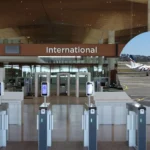
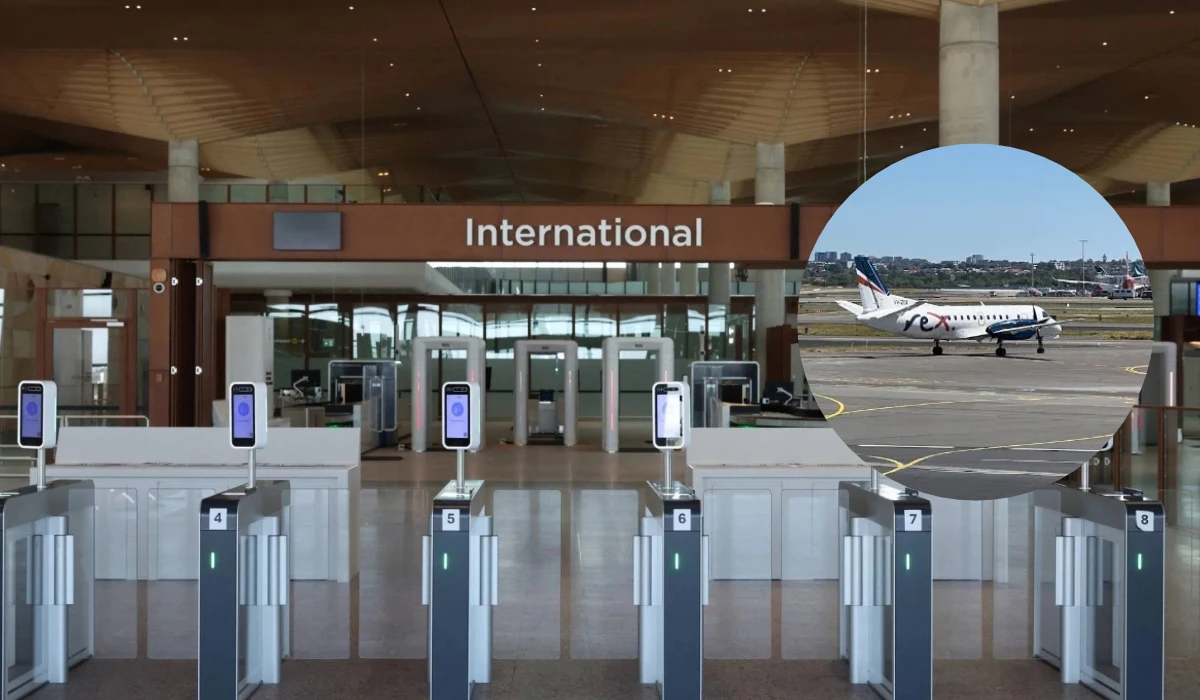
As reported by aviation and business correspondents monitoring regional transport infrastructure, Western Sydney International Airport, located 50 kilometres inland from Sydney’s central business district at Badgerys Creek, is scheduled to handle its first commercial passenger flight on Sunday—a domestic service operated by low-cost carrier Jetstar heading to the Gold Coast.
According to flight tracking and industry schedule data supplied by aviation analytics firm Cirium, the newly constructed facility has drawn commitments from only a small selection of airlines.Cirium data indicates that the airport will maintain six or fewer scheduled commercial flights per day over the next 12 months.
Australia’s largest aviation infrastructure project in decades is entering service at a time when global air transport is navigating macroeconomic headwinds, including sustained jet fuel costs and elevated passenger fares. Domestically, major airlines are exercising capacity discipline rather than expanding network routes. Furthermore, global aircraft delivery delays have left carriers with limited spare fleet capacity to deploy to an unproven airport location.
Which Airlines Are Currently Scheduled to Operate Out of the New $4 Billion Site?
As documented by industry data from Cirium, major domestic carriers have taken a cautious approach toward the new gateway.Qantas Airways plans to operate an average of just over one domestic flight per day from March 2027. Virgin Australia Holdings, the nation’s second-largest domestic airline, currently has no flights scheduled from the facility.
In an official public statement regarding network expansion, Virgin Australia stated: “We are looking closely at the Western Sydney opportunity and assessing whether it would fit into a network and schedule that best serves the needs of our customers”.
Referring to previous strategic comments, Qantas Chief Executive Officer Vanessa Hudson highlighted the geographical relevance of the Western Sydney region, particularly for its budget subsidiary Jetstar. Vanessa Hudson stated: “We expect demand will grow, and when we see that, we’ll put more frequency in”.
Beyond Jetstar and Qantas, a small group of international carriers—including Air New Zealand, Vietjet Aviation, Fiji Airways, and Singapore Airlines—have committed to initial service routes connecting through the terminal.
In an interview discussing airline adoption, Western Sydney International Chief Executive Officer Simon Hickey expressed confidence in the airport’s long-term trajectory, confirming that commercial negotiations are progressing with additional carriers. Simon Hickey stated: “Right now, I’m really happy with where we’re sitting”. However, Simon Hickey emphasized that local market adoption remains crucial, adding: “It’s use it or lose it. That will mean that we continue to grow and other airlines will come and join the pack”.
How Do Transport Connections and Passenger Forecasts Compare to Sydney Kingsford Smith?
As reported by urban transport analysts, ground transport logistics present a notable obstacle for initial passenger adoption. A planned passenger rail link connecting the terminal to the wider Sydney rail network will not open until 2027 at the earliest. In the interim, public transit options rely on road connections and a shuttle bus to central Sydney that costs AU$55 and takes approximately one hour.
By contrast, Sydney Kingsford Smith Airport remains situated approximately 20 minutes from the city center by taxi or train, maintaining its status as Australia’s primary international gateway.
Evaluating the competitive dynamic between the two hubs, David Levinson, Professor of Transport at the University of Sydney, noted that the established gateway retains a distinct locational advantage. David Levinson stated that “the main airport is much more convenient to almost all travelers,” adding that passenger volume forecasts for Western Sydney International appear “a bit optimistic”.
According to the airport’s master plan, Western Sydney International projects handling 8.4 million passengers annually by 2030, with volume rising toward 20 million by 2045. Long-term planning documents project growth to 82 million passengers per year by 2063, positioned with the goal of ultimately becoming Sydney’s principal aviation hub.
Background of the Particular Development After the News
The opening of Western Sydney International Airport concludes an eight-decade political debate regarding Sydney’s long-term aviation capacity. First proposed as a concept in 1946, the federal government officially selected the farmland site at Badgerys Creek in 2014 following decades of environmental reviews, site assessments, and parliamentary debates. Construction commenced in 2018, with initial air cargo operations launching at the facility in July.
Demographic projections form the primary commercial justification for the $5.6 billion development. According to master plan statistics, half of Sydney’s projected 6.1 million population will reside in the city’s western suburbs by 2030. Furthermore, approximately 40 per cent of Greater Western Sydney’s population was born overseas, creating an organic demographic base for direct international flights to regions such as India, China, and Vietnam.
Industry body representatives have noted that new secondary airports typically experience slow initial adoption curves. Stephen Beckett, Chief Executive Officer of Airlines for Australia & New Zealand (A4ANZ), noted: “Some airlines will sit back and make their own commercial assessments based on passenger demand”.
However, aviation analysts have drawn parallels with historical secondary airport developments globally. Transport Professor David Levinson compared the facility to Montreal’s Mirabel Airport, which opened in 1975 but eventually ceased commercial passenger services in 2004 to operate primarily as a freight hub. David Levinson stated that Western Sydney International is currently trying to serve a market that does not fully exist yet, describing the passenger launch as “early, given actual demand”.
Similarly, Peter Forsyth, an aviation economics consultant and former professor at Monash University, highlighted potential parallels with Victoria’s Avalon Airport, which has struggled to establish itself as a true peer to Melbourne Airport despite hosting low-cost carriers since 2004. Peter Forsyth observed that growth at the new Sydney site will be a “slow burn,” concluding: “There is a market there, but exactly how big it is, I don’t know”.
How This Development Can Affect Australian Travelers, Airlines, and Regional Infrastructure
The commercial rollout of Western Sydney International Airport is set to generate distinct impacts across the aviation sector and local economy:
- For Passengers in Greater Western Sydney: Local residents in Sydney’s outer western suburbs gain long-term convenience, avoiding the journey across the city to Kingsford Smith. However, early passengers will experience limited destination options and schedule flexibility until additional carriers introduce capacity. Travelers heading to the central business district will face higher ground transport costs and longer travel times until the dedicated rail link opens in 2027.
- For International Freight and Commercial Airlines:The primary operational advantage for airlines is the absence of an overnight noise curfew.Unrestricted 24-hour operations allow international carriers to schedule late-night departures and arrival slots that align seamlessly with global long-haul connectivity hubs across Asia and the Middle East, offering commercial freight operators and international airlines operational flexibility not available at Kingsford Smith.
- For Regional Economic Development: Over the medium to long term, corporate investment and commercial real estate surrounding the Badgerys Creek Aerotropolis precinct are expected to grow. While passenger numbers will start slowly, global forecasts from the International Air Transport Association (IATA) indicating that air travel demand will double by 2050 suggest that the airport’s strategic value will increase as Sydney’s population expands westward.