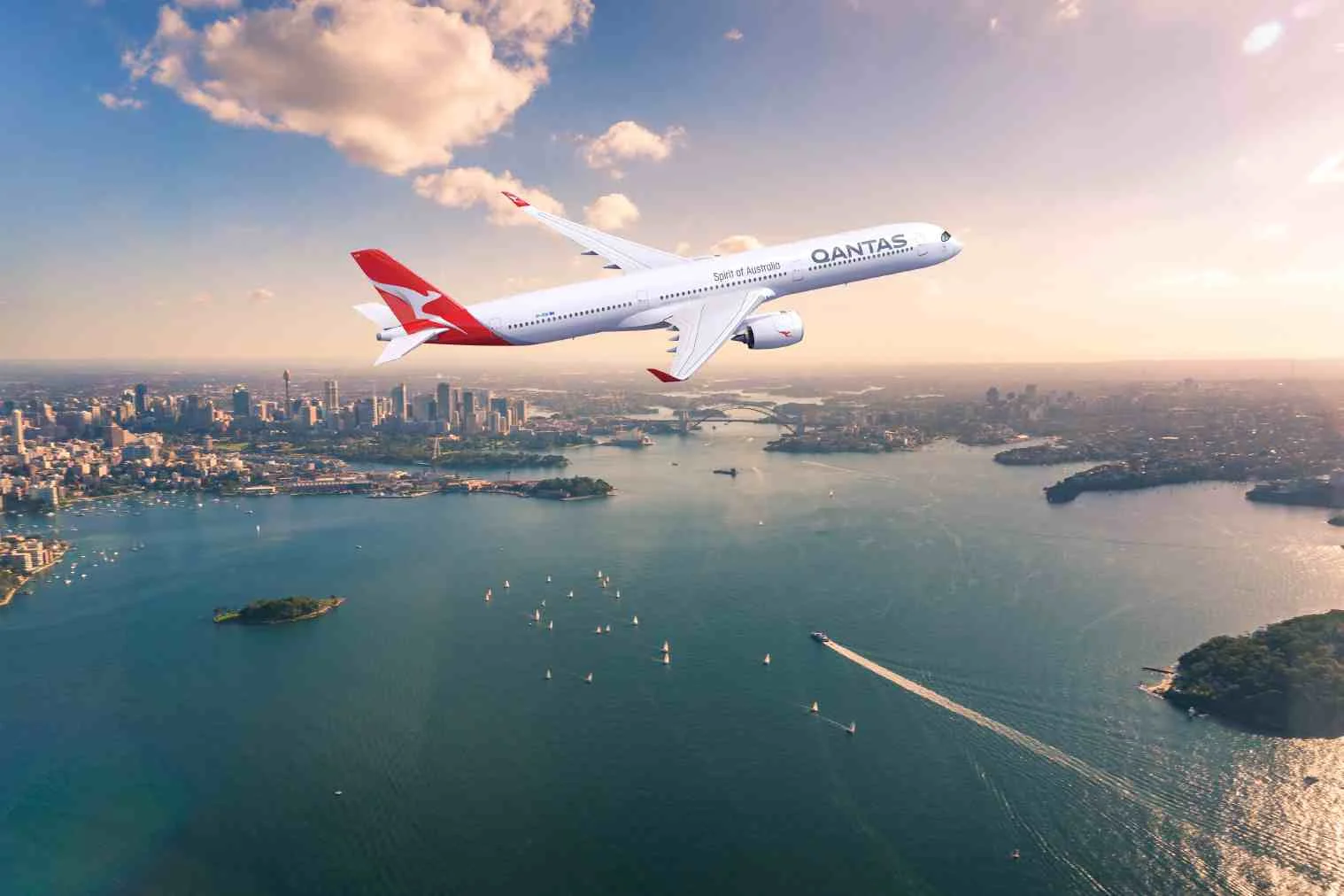
Key Points
- Historic Flight Number Transfer: Qantas announced on 9 November 2026 that its flagship flight numbers, QF1 and QF2, will be transferred to operate nonstop ultra-long-haul services between Sydney and London under Project Sunrise starting in October 2027.
- Significant Travel Time Reduction: The nonstop connection will shave up to four hours off total travel time compared to the carrier’s existing one-stop services.
- Continuation of One-Stop Service: Passengers seeking an intermediate stopover can still fly the Sydney–Singapore–London route, which will be renumbered as QF5 and QF6.
- Cascading Flight Number Changes: The existing seasonal Perth–Rome flights operating as QF5 and QF6 will shift to new flight numbers QF105 and QF106 to accommodate the timetable restructuring.
- Customised Ultra-Long-Range Fleet: Project Sunrise flights will utilize a fleet of 12 specially configured Airbus A350-1000ULR aircraft fitted with an extra 20,000-litre fuel tank, capable of flying over 16,000 kilometres non-stop for up to 22 hours.
- Premium-Heavy Cabin Layout: The Airbus A350-1000ULR will accommodate just 238 passengers across four cabin classes (First, Business, Premium Economy, and Economy), featuring dedicated First Class suites and specialized passenger wellness spaces.
- Commercial Ticketing Schedule: Qantas confirmed that ticket sales for the nonstop Sydney–London flights will open in February 2027, ahead of the first delivery of the A350 fleet in April 2027 and commercial service launch in October 2027.
Sydney (Sydney Now Magazine) November 9, 2026 – Australian flag carrier Qantas Airways has officially confirmed that its legacy flight numbers QF1 and QF2 will be reassigned to its nonstop Sydney–London flights under Project Sunrise, scheduled to launch in October 2027. As reported by aviation journalist Connor Kerr of MiGFlug and corroborated by corporate press releases published on the official Qantas News Room on Monday, 9 November 2026, the strategic decision ties the airline’s historic “Kangaroo Route” branding directly to its forthcoming ultra-long-haul direct service. Flying on customized Airbus A350-1000ULR aircraft capable of remaining airborne for up to 22 hours, the direct service will reduce total travel time between eastern Australia and Great Britain by up to four hours, ending the necessity of an intermediate stopover for point-to-point travellers.
- What Are the Operational Details and Fleet Specifications of Qantas’ Project Sunrise?
- How Will Existing Flight Schedules and Numbers Change Across the Qantas Network?
- When Will Tickets Go on Sale for the Nonstop Qantas Sydney–London Flight?
- Background of the Particular Development After the News
- How This Development Can Affect Global Airlines, Long-Haul Passengers, and International Trade
What Are the Operational Details and Fleet Specifications of Qantas’ Project Sunrise?
According to technical specifications published by Qantas Airways and reported by Aerospace Global News, Project Sunrise represents the realization of ultra-long-haul commercial aviation.
To operate non-stop routes connecting Sydney with London and New York, Qantas ordered 12 specially modified Airbus A350-1000ULR (Ultra Long Range) widebody aircraft.
Key engineering and configuration parameters of the aircraft include:
- Extended Fuel Capacity: The A350-1000ULR is constructed with a center-tank modification carrying an additional 20,000 litres of jet fuel, expanding total flight range beyond 16,000 kilometres.
- Reduced Passenger Density: While a standard dual-class Airbus A350-1000 typically accommodates between 350 and 410 passengers, Qantas configured its ULR variant for just 238 passengers to reduce takeoff weight and increase passenger comfort on flights lasting up to 22 hours.
- Four-Cabin Architecture: The aircraft features six fully enclosed First Class suites, 52 Business Class suites, 40 Premium Economy seats, and 140 Economy seats.
- Dedicated Movement and Wellness Zones: Located between the Premium Economy and Economy cabins, Qantas built a dedicated “Wellbeing Zone” equipped with stretch handles, guided exercise screens, and hydration stations designed to combat deep vein thrombosis and jet lag during long journeys.
As reported by MiGFlug, Qantas expects the flight-testing program for the first Airbus A350-1000ULR to culminate in initial aircraft delivery by April 2027, clearing the way for commercial launch in October 2027.
How Will Existing Flight Schedules and Numbers Change Across the Qantas Network?
As reported by Qantas News Room and detailed by aviation outlets including Karryon and Travel Weekly, reassigning QF1 and QF2 to the nonstop flight triggers a structured renumbering process across the airline’s long-haul international network.
For generations, the QF1 designation (Sydney–Singapore–London) and its return flight QF2 (London–Singapore–Sydney) represented the core of Qantas’ international identity.
To accommodate the Project Sunrise transition without disrupting existing network options, Qantas outlined a multi-tiered schedule revision:
- Nonstop Sydney–London: Inherits the flagship QF1 (outbound from Sydney) and QF2 (inbound from London Heathrow) flight numbers starting October 2027.
- One-Stop Sydney–Singapore–London: Will continue operating daily to serve leisure and corporate passengers who prefer a midpoint break in South East Asia, but will operate under flight numbers QF5 and QF6.
- Seasonal Perth–Rome Route: Currently assigned flight numbers QF5 and QF6, the European seasonal service will be renumbered as QF105 and QF106.
As quoted by Karryon, Qantas Group Chief Executive Officer Vanessa Hudson commented on the evolutionary milestone of the route, stating: “Every generation of aircraft has taken a stop out of the journey. Today, we’re taking out the last one”.
When Will Tickets Go on Sale for the Nonstop Qantas Sydney–London Flight?
According to official press releases issued by Qantas, commercial ticket sales for the new nonstop Sydney–London flights will open globally in February 2027.
The airline explicitly cautioned travelers that the announcement made on 9 November 2026 concerned flight number allocations and operational schedules, rather than the immediate opening of booking engines.
Specific fare pricing across First, Business, Premium Economy, and Economy cabins will be released when inventory enters the global distribution systems (GDS) in February 2027. Given the premium cabin layout and ultra-long-haul nature of the flights, industry analysts anticipate premium pricing over standard one-stop itineraries.
Background of the Particular Development After the News
The history of the “Kangaroo Route” dates back to December 1947, when Qantas first operated a commercial service connecting Sydney and London. That inaugural journey aboard a sub-pressurized Lockheed C-69 Constellation took four days to complete, requiring seven technical and refueling stops across Darwin, Singapore, Calcutta, Karachi, Cairo, and Castel Benito (Tripoli) before reaching London. Over subsequent decades, advancements in jet propulsion gradually reduced both travel time and intermediate stops.
The introduction of the Boeing 707 in 1959, followed by the Boeing 747 “Jumbo Jet” in 1971 and the double-decker Airbus A380 in 2008, consolidated the route into a one-stop service, typically routed via Singapore Changi Airport or Middle Eastern hubs. In 2018, Qantas took a significant step toward point-to-point connections by launching a nonstop Boeing 787-9 Dreamliner service between Perth and London Heathrow. However, direct flights connecting the major metropolitan centers of Australia’s east coast—Sydney and Melbourne—to Europe remained beyond the non-stop payload and range capabilities of commercial passenger jets until Airbus finalized the design of the A350-1000ULR under Project Sunrise.
How This Development Can Affect Global Airlines, Long-Haul Passengers, and International Trade
The formal assignment of QF1 and QF2 to non-stop flights and the October 2027 launch of Project Sunrise will create substantial structural shifts across the aviation and travel industries.
Impact on Corporate and Premium International Passengers
For business travelers, corporate executives, and high-yielding international passengers, saving up to four hours of travel time while eliminating the stress of transit connections will alter travel logistics between Australia and Europe. The specialized cabin design, reduced overall seat count, and dedicated wellness features are expected to set a new benchmark for ultra-long-haul passenger comfort, though premium fares will likely reflect the unique nature of the point-to-point service.
Impact on Middle Eastern and Asian Hub Airports
For international transit hubs—most notably Singapore Changi, Dubai International, and Doha Hamad—the establishment of direct flights between Eastern Australia and Western Europe poses a strategic challenge to traditional stopover traffic. While budget-conscious and leisure travelers will continue to utilize one-stop itineraries, mid-tier and premium corporate traffic may bypass traditional hub airports, prompting competing Gulf and Asian carriers to adjust pricing structures and schedule connections to retain market share.
Impact on Global Aerospace Manufacturers and Ultra-Long-Haul Competitors
For commercial aircraft manufacturers and global airlines, the operational rollout of the Airbus A350-1000ULR will serve as a definitive test case for ultra-long-range point-to-point flying. A successful commercial deployment by Qantas is likely to encourage competing international airlines to explore similar point-to-point city pairs—such as Auckland to London or London to Buenos Aires—accelerating the global transition away from traditional hub-and-spoke international transit networks toward direct ultra-long-haul routes.