Key Points
- The Minns Labor Government has invested $5.2 million in two state-of-the-art, 45-metre aerial ladder platform trucks to bolster Fire and Rescue NSW (FRNSW) emergency capabilities.
- Assembled locally by Alexander Perrie and Co. at their Kirrawee facility in Sydney’s south, the vehicles represent the largest capacity trucks in the entire FRNSW fleet.
- The specialized platforms will be stationed permanently at Glebe and Parramatta fire stations to address rapid high-rise urban expansion across Western Sydney and inner-city precincts.
- Each $2.6 million vehicle features thermal imaging live feeds, remote platform controls, automated computer ladder positioning, and a 500-kilogram rescue capacity capable of accommodating stretchers and wheelchairs.
- The acquisition forms part of a broader $105 million FRNSW capital investment project by the New South Wales Government for the current financial year.
Sydney (Sydney Now Magazine) November 7, 2026 – The New South Wales Government has announced a $5.2 million capital investment to acquire two cutting-edge aerial ladder platform trucks designed to strengthen firefighting and high-angle rescue operations across Greater Sydney. Unveiled on Saturday, 7 November 2026, the 45-metre specialized vehicles are valued at $2.6 million each and represent the largest operational apparatus within the Fire and Rescue NSW (FRNSW) fleet. Manufactured and assembled locally in Sydney’s south, the trucks will be stationed at strategic emergency response hubs in Glebe and Parramatta. The investment aims to provide critical infrastructure support as suburban density increases and high-rise commercial and residential developments expand throughout Western Sydney and the central metropolitan corridor.
- What Advanced Technical Capabilities Do the New $2.6 Million Aerial Platform Trucks Possess?
- Why Were Parramatta and Glebe Selected as the Primary Deployment Stations?
- How Does This Investment Support Local Manufacturing and Overall Emergency Budgets?
- Background of the Particular Development After the News
- How This Development Can Affect Emergency Services, Urban Developers, and Local Communities
What Advanced Technical Capabilities Do the New $2.6 Million Aerial Platform Trucks Possess?
As reported by official news releases from the NSW Government Cabinet Office and technical details confirmed by Fire and Rescue NSW, the two newly commissioned vehicles represent a major technological leap for urban firefighting and structural rescue operations.
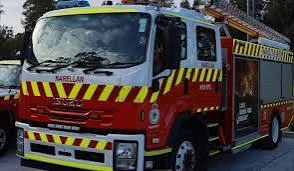
Assembled by local engineering firm Alexander Perrie and Co. at their specialized manufacturing plant in Kirrawee, each vehicle features a 45-metre articulated boom capable of extending high above tall structures or reaching below ground level down steep embankments and industrial infrastructure.
The key operational and technical specifications integrated into each appliance include:
- Payload and Access Capacity: The platform cage supports up to 500 kilograms, engineered specifically to accommodate emergency stretchers and wheelchairs during complex evacuations.
- Thermal Intelligence: High-definition thermal imaging cameras mounted on the platform transmit real-time video feeds directly to the FRNSW Command Centre, allowing incident commanders to track thermal anomalies and structural integrity.
- Remote Operational Control: Firefighters can maneuver the ladder platform remotely from ground level during high-risk structural collapse scenarios, isolating personnel from direct blast or heat hazards.
- Automated Memory Systems: Onboard navigation computers allow operators to record precise ladder positions, enabling the apparatus to automatically return to designated window frames or balcony access points during repetitive rescue cycles.
Inspectors, emergency service representatives, and local MPs gathered at the Kirrawee assembly facility to conduct a formal inspection of the appliances prior to their deployment.
Why Were Parramatta and Glebe Selected as the Primary Deployment Stations?
According to statements delivered by emergency management officials and regional members of parliament, the strategic placement of the apparatus at Parramatta and Glebe reflects changing urban demographics and structural high-density growth across Sydney.
With Parramatta establishing itself as Sydney’s second central business district, multi-story residential towers and commercial complexes require specialized aerial access to manage high-rise structural fires effectively. Concurrently, Glebe provides crucial coverage for inner-city urban density, historical structures, and major industrial infrastructure surrounding the harbour district.
Commenting on the deployment to Western Sydney, Member for Parramatta Donna Davis highlighted the growing vertical complexity of the district. As reported by the NSW Government Ministerial Media Centre, Member for Parramatta Donna Davis stated: “The Minns Labor Government is investing in the future of western Sydney, and as our buildings in Parramatta get higher and higher with more complexities it is reassuring for our community that we are delivering the equipment and services to match it”.
Highlighting the support for local manufacturing, Member for Heathcote Maryanne Stuart remarked on the broader economic benefits for Sydney’s southern industrial zone. As reported by Government News, Member for Heathcote Maryanne Stuart stated: “I’m proud to be part of a government that is investing in our emergency services as well as local manufacturing and jobs. These two trucks have been built right here in Kirrawee, continuing a 40-year partnership between Fire and Rescue NSW and Alexander Perrie and Co.”
These two new additions bring FRNSW’s total number of 45-metre aerial ladder platforms to nine, serving within a broader 28-vehicle specialized aerial fleet distributed across New South Wales.
How Does This Investment Support Local Manufacturing and Overall Emergency Budgets?
As detailed in financial documentation released by the NSW Department of Communities and Justice, the vehicle acquisition forms part of a larger $105 million capital investment allocation for Fire and Rescue NSW during the current financial year. Within this funding package, approximately $24 million has been dedicated specifically for replacing aging fire engines, aerial appliances, and heavy operational support vehicles across the state in 2026-27.
Addressing media representatives at the Kirrawee facility, Minister for Emergency Services Jihad Dib emphasized the double benefit of upgrading first-responder capabilities while sustaining local industrial employment.
As reported by emergency services correspondents for The Sydney Morning Herald, Minister for Emergency Services Jihad Dib stated: “As Sydney grows, our firefighters need the equipment and technology to keep pace with the challenges they’re facing on the ground. These are the biggest trucks in the Fire and Rescue NSW fleet, and they’ll give our firefighters greater reach and capability when responding to major fires and complex rescues”.
Minister Dib further added: “It’s great to see these specialist vehicles assembled right here in Sydney’s south. We’re backing local businesses, supporting local jobs and making sure our emergency services have the equipment they need to protect our community well into the future”.
Outlining the practical history of aerial platforms in major emergencies, FRNSW Operational and Strategic Services Executive Director Kelly McFadyen emphasized their decisive role in recent high-profile disasters.
As reported by Fire and Rescue NSW Media, Executive Director Kelly McFadyen stated: “FRNSW operates nine of these ladder trucks as part of our 28-vehicle aerial fleet. FRNSW has deployed aerial ladder platforms at major incidents including the Wickham fire in Newcastle in 2022, the Surry Hills building fire in 2023 and the North St Marys fire in November last year. FRNSW works with Alexander Perrie to provide specialist engineering, installation, commissioning and technical support as the bespoke vehicles are created”.
Representing the manufacturing partner, Chief Commercial Officer of Alexander Perrie and Co. David Vanderhorst reflected on the historical ties between the engineering firm and Australian fire services.
As reported by Australian Defence & Emergency Services News, Chief Commercial Officer David Vanderhorst stated: “Alexander Perrie, in partnership with Fire and Rescue NSW, introduced the first aerial firefighting platform into Australia in 1986. We continue to supply and support these highly specialised vehicles, designed to meet the unique and challenging conditions faced by Australian firefighters. As we celebrate 80 years in business, we’re proud to continue helping to protect communities across NSW”.
Background of the Particular Development After the News
The commissioning of the two 45-metre aerial ladder platforms comes at a period of unprecedented urban consolidation across Greater Sydney. Over the past decade, urban planning initiatives have concentrated population growth into vertical multi-dwelling developments along transit corridors, creating unique operational challenges for emergency service agencies. High-density precincts present severe logistical hurdles during major structural blazes, including restricted access for standard pumpers, complex ventilation dynamics, and elevated risks of rapid exterior facade fire spread.
Historically, major structural fires in the Sydney metropolitan area—such as the multi-alarm Surry Hills timber building fire in May 2023 and heavy industrial blazes in North St Marys—demonstrated the absolute operational necessity of heavy aerial platforms capable of delivering massive volume water streams from above while rescuing trapped occupants. In response to these historical challenges, the NSW Government initiated a systematic fleet modernization program, progressively deploying modern aerial platforms to strategic stations including Manly, City of Sydney, Kogarah, Darlinghurst, Woollahra, and now Parramatta and Glebe.
How This Development Can Affect Emergency Services, Urban Developers, and Local Communities
The integration of these advanced $2.6 million aerial ladder trucks into the active FRNSW fleet will have direct operational and economic implications for emergency responders, municipal planners, real estate developers, and suburban residents across New South Wales.
Impact on Firefighters and Operational Emergency Personnel
For operational firefighters and technical rescue crews stationed at Parramatta, Glebe, and surrounding stations, the deployment provides vital structural safety protections. The remote platform control features and automated memory positioning reduce physical hazards for personnel during high-risk rescues. Firefighters operating at major industrial blazes or high-rise incidents will benefit from improved reach, real-time thermal imaging intelligence, and higher weight-carrying capacities, significantly reducing rescue completion times during critical life-safety operations.
Impact on High-Rise Property Developers and Urban Planners
For municipal councils, urban designers, and commercial property developers building across Parramatta and inner Sydney, the presence of 45-metre aerial response units within immediate coverage zones enhances urban safety compliance. Access to top-tier aerial emergency apparatus allows urban planners to continue approving high-density vertical projects with greater confidence, knowing that local fire stations possess the specialized equipment required to mitigate high-rise structural hazards.
Impact on Local Manufacturing and Community Safety
For the local industrial manufacturing sector in Sydney’s south and the broader Sydney community, the ongoing partnership between state emergency services and local engineering firms reinforces regional manufacturing resilience. Residents living in high-density residential towers across Parramatta and the inner city gain enhanced emergency protection, ensuring that public safety infrastructure keeps pace with rapid suburban growth.