Key Points
- Commercial Operations Launch:Western Sydney International (Nancy-Bird Walton) Airport officially opened to passenger operations on 25 October 2026, marking the launch of Australia’s first major greenfield international airport in more than 50 years.
- 24-Hour Curfew-Free Advantage: Unlike Sydney’s Kingsford Smith Airport, the new $5.3 billion facility in Luddenham operates 24 hours a day without a night-time flight curfew, unlocking continuous international and domestic air connectivity.
- Expanding Carrier Network: A total of eight major airlines have committed to or commenced services from the hub, including Qantas, Jetstar, Qatar Airways, Air New Zealand, Singapore Airlines, Fiji Airways, VietJet Air, and Emirates.
- Major Cargo Infrastructure: The airport’s 733,000 m² Cargo Precinct commenced freight operations on 27 July 2026, featuring an initial handling capacity of 270,000 tonnes annually, designed to scale up to 1.8 million tonnes.
- Surface Connectivity and Accessibility: Ground access is supported by the toll-free M12 Motorway and a free shuttle bus connection to St Marys station, with a dedicated Sydney Metro rail line scheduled for completion in 2027.
SYDNEY (Sydney Now Magazine) October 28, 2026 – Western Sydney International (Nancy-Bird Walton) Airport officially commenced passenger flight operations on 25 October 2026, ending a five-decade hiatus in major greenfield airport construction across Australia.Situated approximately 45 kilometres west of Sydney’s central business district in Luddenham, the multi-billion-dollar facility opened with an initial capacity to process 10 million passengers annually, with master planning projecting long-term growth up to 82 million passengers per year. Governed by the Commonwealth-owned company WSA Co Limited, the airport operates around the clock without a night-time noise curfew, offering domestic and international airlines an operational alternative to Sydney’s Kingsford Smith Airport.
- Key Points
- What Commercial Airlines and Flight Destinations Are Operating at Western Sydney International Airport?
- How Is Surface Transport Being Managed for Passengers Traveling to Central Sydney?
- What Legal, Environmental, and Regulatory Frameworks Governed the Airport Development?
- How Does the Airport Cargo Precinct Drive Regional Economic Growth and Jobs?
- What Accessibility and Inclusive Design Standards Were Integrated into the Terminal?
- Background of the Badgerys Creek Airport Development and WSA Co Limited
- How This Development Will Affect Aviation Competition, Commercial Property, and Western Sydney Residents
What Commercial Airlines and Flight Destinations Are Operating at Western Sydney International Airport?
The commencement of passenger services on 25 October 2026 brought immediate commercial commitments from major domestic and international air carriers seeking to capitalize on the airport’s 24-hour operational window.
According to official schedule disclosures from WSA Co Limited, the initial roster of operating airlines includes:
- Qantas: Operating four weekly domestic flights connecting Western Sydney directly to Melbourne and Brisbane.
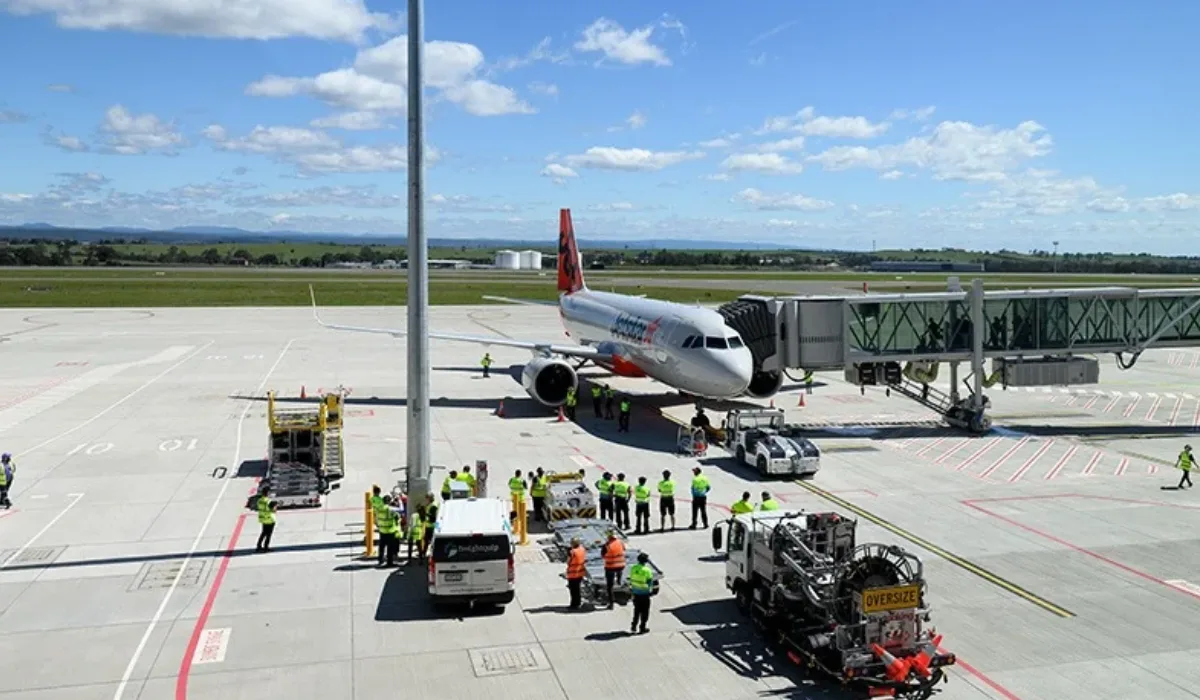
- Jetstar: Operating domestic routes connecting to the Gold Coast, Brisbane, and Melbourne, with Jetstar flight JQ362 becoming the airport’s inaugural passenger departure on 25 October.
- Air New Zealand: Operating direct trans-Tasman international services connecting Western Sydney to Auckland.
- Singapore Airlines: Operating long-haul international flights to Singapore Changi Airport.
- Qatar Airways: Operating direct long-haul flights to Doha, with additional international routes planned.
- Fiji Airways: Operating direct island connectivity to Nadi, Fiji.
- VietJet Air: Operating international services connecting Western Sydney to Vietnam and Bangkok.
- Emirates: Approved to operate seven weekly flights, with schedule announcements pending.
Speaking on the strategic value of the facility, former Aviation Law Association of Australia & New Zealand President John Ribbands noted that 24-hour access offers a significant structural advantage for global airlines. Ribbands stated that “the value for Australia, and for New South Wales, is the access that is gained to international markets by allowing 24-hour access to the airport. Whereas major Metropolitan airports such as Sydney have a nighttime curfew, Western Sydney is now open around the clock which facilitates access for overseas carriers.”
Addressing expectations surrounding potential airfare reductions, Ribbands cautioned that broader macroeconomic factors continue to impact airline pricing models. Ribbands stated that “it is inevitable that the competition provided by the second airport with its greater degree of access will encourage competitive pricing but that said, it is a difficult market for aviation operators at the moment. The high cost of fuel coupled with continuing uncertainty of Middle East routes create a high degree of uncertainty in the marketplace.”
How Is Surface Transport Being Managed for Passengers Traveling to Central Sydney?
Ground transport infrastructure to and from the Luddenham airport site remains an evolving mix of highway connections, express shuttle buses, and pending rail links.
Unlike major metropolitan airports in Europe or existing urban hubs across Australia, Western Sydney International Airport opened without an operational direct rail line to the central city. Passengers arriving at the terminal must rely on motor vehicles or dedicated bus transit:
- M12 Motorway: Road transport is facilitated via the newly constructed, toll-free M12 Motorway, connecting airport traffic directly to Sydney’s orbital motorway network.
- WSI Link Shuttle Bus:A free airport shuttle bus currently operates between the terminal and St Marys railway station, providing an immediate transit connection to the Main Western rail line.
- Sydney Metro Western Sydney Airport Line: Construction continues on the dedicated driverless metro line that will link the airport directly with St Marys. The rail connection is scheduled for commercial completion in 2027.
Despite the modern terminal facilities, the transition to a dual-airport system in Sydney has created occasional passenger confusion. As reported by ABC News on 26 October, individual international travelers reported arriving at Western Sydney International Airport expecting to land at Kingsford Smith Airport in Mascot, highlighting early operational adjustments as global booking engines incorporate the new airport code (WSI).
What Legal, Environmental, and Regulatory Frameworks Governed the Airport Development?
The delivery of Western Sydney International Airport required extensive federal and state legislative coordination over a decade of planning and construction.
As a federally-leased facility on Commonwealth land, the airport is governed under the Airports Act 1996 (Cth) and the Airports Regulations 1997 (Cth). Protected airspace surrounding the site was formally declared under federal airspace regulations on 19 October 2017, requiring developments encroaching on designated airspace to seek approval from the Department of Infrastructure, Regional Development and Cities alongside standard approvals under the Environmental Planning and Assessment Act 1979 (NSW).
Environmental planning involved a multi-year assessment cycle:
- October 2015:The Federal Government released a draft Environmental Impact Statement (EIS), receiving nearly 5,000 public submissions.
- September 2016: Urban Infrastructure Minister Paul Fletcher MP announced the finalisation of the EIS, presenting it to Environment Minister Josh Frydenberg MP.
- December 2016:The formal Airport Plan was finalized, establishing statutory environmental conditions and authorizing Stage 1 construction.
- August 2018: The Biodiversity Offset Delivery Plan (BODP) was approved by environmental regulators to mitigate impacts on threatened ecosystems present across the 1,780-hectare site.
A spectrum of major Australian legal firms—including Ashurst, Clayton Utz, Pinsent Masons, and MinterEllison—were retained throughout the development phase to advise on infrastructure procurement, international airline agreements, environmental compliance, and commercial precinct licensing.
How Does the Airport Cargo Precinct Drive Regional Economic Growth and Jobs?
Spanning 733,000 square metres in Stage 1, the Western Sydney International Cargo Precinct represents a primary economic pillar of the broader Western Sydney Aerotropolis and Bradfield City development.
Having commenced commercial freight operations on 27 July 2026, the dedicated Cargo Precinct features:
- The capacity to accommodate up to eight Boeing 747/777 heavy freighters or 16 domestic freighter aircraft simultaneously.
- An initial annual freight handling throughput of 270,000 tonnes, with master-plan expansion capacity reaching 1.8 million tonnes annually.
- Economic projection models supporting more than 19,000 direct and indirect jobs annually across connected supply chains, freight forwarding, and commercial logistics.
Commercial law firms specializing in trade, maritime, shipping, construction, and real estate are experiencing expanded practice opportunities as logistics operators establish facilities within the adjacent business precincts.
What Accessibility and Inclusive Design Standards Were Integrated into the Terminal?
Design and construction of the Nancy-Bird Walton Terminal complied with statutory requirements under the Disability (Access to Premises – Buildings) Standards 2010 and the Disability Discrimination Act 1992.
WSI Co Limited developed its Access and Inclusion Strategy in direct partnership with specialized advocacy bodies, including Get Skilled Access, the Australian Disability Network, and Diversity Council Australia. Dedicated accessible infrastructure features throughout the terminal include:
- Multi-faith prayer rooms, quiet rooms, and sensory spaces for neurodivergent travelers.
- Hearing loop technology, digital visual displays, and multi-format wayfinding systems.
- Service animal relief areas and accessible family change facilities.
- Dedicated kerbside accessible bays at departure and arrival zones for independent drop-offs.
- Mechanical wheelchair lifts installed at every gate to facilitate dignified tarmac transfers to aircraft.
In a statement addressing the terminal design, Western Sydney International Airport Chief Executive Officer Simon Hickey stated that “we are proud to deliver spaces, technology and nation-leading facilities throughout our airport that are designed to make the travel experience less stressful, more accessible, and a dignified experience for people of many abilities, beliefs and preferences.”
Background of the Badgerys Creek Airport Development and WSA Co Limited
The establishment of a second major airport for Sydney concludes more than 40 years of urban planning deliberations. The Commonwealth Government first identified and acquired land at Badgerys Creek during the 1980s, placing strict planning restrictions on surrounding land corridors to prevent encroaching residential development.
On 9 May 2017, the Australian Government formally committed up to $5.3 billion in equity funding to construct the airport through a wholly-owned corporate entity. WSA Co Limited was formally established on 7 August 2017, governed by an independent corporate board chaired by former Singtel CEO Paul O’Sullivan.
On 17 May 2018, the Commonwealth signed the formal airport lease over to WSA Co Limited. Following the lease execution, then-WSA Co Chief Executive Officer Graham Millett stated that “we are delighted to accept the Airport Lease from the Commonwealth Government and look forward to delivering a world class airport in Western Sydney”. Earthworks on the 1,780-hectare site commenced on 24 September 2018, leading to the construction of the 3.7-kilometre runway, terminal infrastructure, and dedicated cargo precincts completed in mid-2025 prior to a year of operational testing.
How This Development Will Affect Aviation Competition, Commercial Property, and Western Sydney Residents
The successful opening of Western Sydney International Airport will initiate long-term structural changes across Australia’s aviation sector, commercial real estate markets, and local employment patterns.
1. Increased Airline Competition and Operational Flexibility
The availability of a 24-hour, curfew-free runway in the Sydney basin will encourage international and low-cost carriers to schedule flights during off-peak overnight hours. This operational flexibility is expected to increase total seat capacity into New South Wales, applying downward pressure on international and domestic airfares over time as carrier networks mature.
2. Commercial Property Appreciation and Industrial Development in the Aerotropolis
Property markets surrounding Luddenham, Badgerys Creek, Kemps Creek, and St Marys will continue to experience heightened institutional investment. The demand for industrial warehousing, cold-storage logistics, and commercial office space within the Western Sydney Aerotropolis and Bradfield City will drive elevated land values and construction activity along the M12 corridor.
3. Regional Job Creation and Shift in Commuter Patterns
For residents across Western Sydney, the airport and connected commercial precincts will reduce the necessity for long daily commutes to the Sydney CBD or Mascot. With thousands of direct operational positions created across airport management, aviation security, retail, cargo handling, and hospitality, the airport will serve as a primary engine for socio-economic growth across Greater Western Sydney.