Key Points
- Air New Zealand has made aviation history by becoming the first international passenger carrier to operate a flight into Sydney’s brand-new Western Sydney International (Nancy-Bird Walton) Airport.
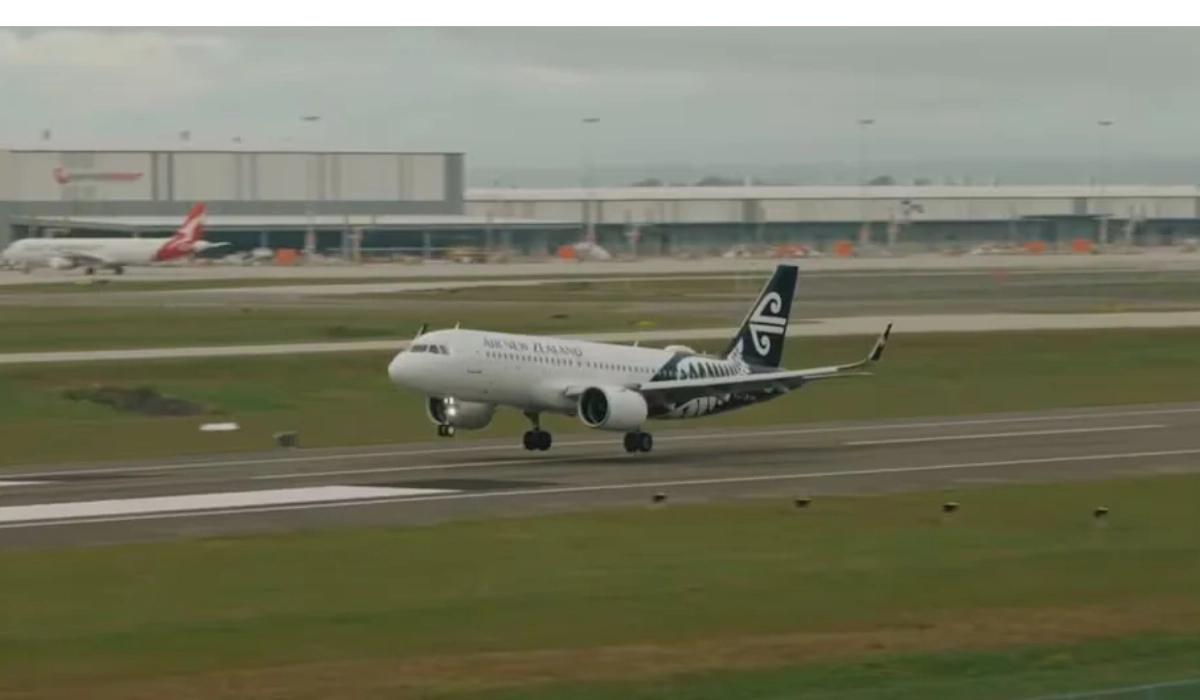
- Inaugural international flight NZ165 touched down from Auckland on Monday morning, October 26, 2026, before making its scheduled return voyage to New Zealand as flight NZ166.
- The landmark landing occurred just one day after the A$5.6 billion infrastructure project opened its gates to domestic commercial aviation on Sunday, October 25.
- Located at Badgerys Creek, approximately 50 kilometres west of Sydney’s central business district, the new global gateway operates on an uncurfewed, 24-hour daily schedule.
- In an Australian aviation first, arriving international passengers can submit digital arrival declarations prior to touchdown, eliminating traditional paper landing cards from day one.
- Air New Zealand Chief Operations Officer Kate Boyer and Western Sydney Airport Chief Executive Simon Hickey hailed the new service as a transformative link for trans-Tasman trade, business, and tourism.
Sydney (Sydney Now Magazine) October 26, 2026 — Air New Zealand has officially inaugurated international passenger operations at the newly constructed Western Sydney International (Nancy-Bird Walton) Airport, flying the facility’s first cross-border passenger service from Auckland on Monday, October 26, 2026. Flight NZ165 landed at the Badgerys Creek site following the airport’s domestic commercial debut a day prior, establishing an immediate trans-Tasman bridge. Operating around the clock without night-time curfew constraints, the 24-hour facility marks Australia’s first major greenfield international airport opening in more than 50 years. The terminal also debuts Australia’s first paperless customs arrival processing system, allowing arriving passengers to complete mandatory border declarations digitally before landing.
- Key Points
- How Did Air New Zealand Launch the First International Flight into Western Sydney Airport?
- Why Is 24-Hour Operation a Major Operational Advantage for Western Sydney International Airport?
- How Does the Digital Passenger Arrival System Work at the New Terminal?
- Background of the Particular Development
How Did Air New Zealand Launch the First International Flight into Western Sydney Airport?
As reported by aerospace correspondents monitoring trans-Tasman flight paths, Air New Zealand flight NZ165 touched down at Western Sydney International Airport on Monday morning, October 26, 2026, marking the formal opening of the airport’s international terminal. The inaugural flight originated from Auckland International Airport, carrying passengers and crew across the Tasman Sea before turning around to return to Auckland as flight NZ166.
The international arrival comes precisely 24 hours after domestic carrier Jetstar launched the airport’s initial commercial passenger service on Sunday, October 25. The milestone establishes a secondary international entry point into Australia’s largest metropolitan region, providing travelers heading to New South Wales with a direct alternative to Sydney’s legacy Kingsford Smith Airport.
According to flight management logs, the introductory schedule establishes three weekly return services connecting Auckland directly with Western Sydney. Speaking on the strategic significance of the inaugural flight, Air New Zealand Chief Operations Officer Kate Boyer highlighted the deep economic and cultural ties uniting the two nations.
As reported by aviation journalists, Kate Boyer stated: “Australia and New Zealand share a special connection, and this new service is about bringing people and places even closer together.” Boyer further emphasized that the new direct flight route would unlock significant “tourism, trade and business opportunities on both sides of the Tasman”.
Why Is 24-Hour Operation a Major Operational Advantage for Western Sydney International Airport?
As reported by infrastructure and transport reporters covering Sydney’s transport sector, the opening of Western Sydney International Airport addresses decades-long capacity limitations at Sydney’s primary Kingsford Smith Airport in Mascot.
Located in the suburb of Badgerys Creek, approximately 50 kilometres west of Sydney’s central business district, the new A$5.6 billion aviation hub features a single 3.7-kilometre runway designed to accommodate long-haul widebody aircraft, including Airbus A350s and Boeing 777s. Crucially, unlike Kingsford Smith Airport—which is legally restricted by a strict noise curfew between 11:00 p.m. and 6:00 a.m.—Western Sydney International operates 24 hours a day, seven days a week.
Greeting the arrival of the inaugural flight with traditional Maori greetings, Western Sydney International Chief Executive Simon Hickey welcomed the New Zealand delegation to the facility.
As reported by aviation writers, Simon Hickey stated: “Kia ora to our friends across the Tasman and a very warm welcome to Sydney’s new global gateway.” Addressing the operational flexibility offered by round-the-clock logistics, Hickey added that the airport’s “round-the-clock operations would give airlines more flexibility to connect with global hubs,” allowing international long-haul carriers to optimize departure and arrival slots without curfew bottlenecks.
How Does the Digital Passenger Arrival System Work at the New Terminal?
As reported by border technology and aviation writers attending the terminal opening, international passengers arriving on flight NZ165 experienced Australia’s first paperless passenger border entry system.
Under the modernized arrival protocol developed in partnership with Australian border enforcement agencies, incoming passengers landing at Western Sydney International can complete their official incoming passenger declarations digitally via a mobile application or web portal prior to touching down on Australian soil.
This digital declaration process replaces the paper-based physical customs cards traditionally handed out by cabin crew onboard international flights bound for Australia. Border officials confirmed that Western Sydney International is the first airport in the country to eliminate the paper landing card from its very first day of international passenger operations, accelerating baggage clearance and reducing terminal processing times for arriving international travelers.
Background of the Particular Development
The arrival of Air New Zealand flight NZ165 represents the culmination of more than four decades of political debate, site selection, and construction regarding a second major airport for the Greater Sydney region. First formally proposed by federal authorities in the mid-1980s, the Badgerys Creek site was selected due to rapid population growth across Western Sydney, which is home to more than 2.5 million residents.
Construction on the greenfield site began in late 2018 under the federal government-owned Western Sydney Airport Corporation. The A$5.6 billion Phase 1 development includes a state-of-the-art multi-brand passenger terminal, automated baggage handling systems, freight precinct, and dedicated ground transport connections, including the newly constructed Sydney Metro Western Sydney Airport line.
Air New Zealand was among the early international full-service carriers to commit to operating out of Western Sydney, signing a strategic agreement to establish trans-Tasman routes ahead of the airport’s 2026 completion target. The launch of passenger operations follows cargo line trials that commenced earlier in mid-2026, marking How This Development Can Affect Trans-Tasman Travelers, Local Businesses, and Aviation Competition
Impact on Trans-Tasman Passengers and Western Sydney Residents
For the millions of residents living in Sydney’s western suburbs, Parramatta, and the Blue Mountains, the operational launch of Air New Zealand services eliminates the long, congested commute to Kingsford Smith Airport in the city’s southeast. Travelers heading to New Zealand gain direct, localized international access, reduced road travel times, and seamless digital border processing. Furthermore, the introduction of paperless arrival declarations is expected to set a national precedent, encouraging federal border agencies to expand digital processing to major gateways nationwide.
Influence on Airline Competition and Western Sydney Economic Growth
For airline operators and regional tourism boards, Western Sydney’s 24-hour operational status introduces intense market competition. Unencumbered by night-time landing restrictions, rival domestic and international carriers are likely to expand night-time schedules out of Badgerys Creek, exerting downward pressure on trans-Tasman airfares. For the local Western Sydney economy, round-the-clock international connectivity will accelerate freight logistics, stimulate hotel and hospitality developments, and solidify the surrounding Bradfield Aerotropolis as a major hub for high-tech manufacturing, trade, and commercial enterprise in New South Wales.