Key Points
- Inquiry Findings: A New South Wales (NSW) parliamentary select committee inquiring into energy-from-waste facilities has handed down a landmark report containing 22 recommendations.
- Projects Target Rejection: The inquiry explicitly advised the state government to reject two major regional waste incinerator proposals: the $1 billion facility in Parkes and Veolia’s proposed plant at Tarago near Goulburn.
- Statewide Moratorium Proposed: Recommendations include placing a temporary moratorium on all energy-from-waste proposals across NSW and conducting an independent review of the four designated regional development precincts.
- Lack of Social Licence: Inquiry Chair Nichole Overall stated the facilities lacked social licence, community acceptance, and approval from local councils and Aboriginal land councils.
- Divergent Political Views: Labor MLC Emily Suvaal pushed back against a moratorium, arguing that energy-from-waste technology is safe under strict standards and warning that stopping development without viable alternatives is unworkable.
- Government Timeline:The NSW government has until 20 January 2027 to formally issue its response to the committee’s findings.
Sydney (Sydney Now Magazine) October 20, 2026 – A New South Wales parliamentary inquiry into energy-from-waste facilities has recommended that the state government reject plans to burn Sydney’s waste in regional communities. The select committee on proposed energy-from-waste technology made 22 recommendations after holding seven comprehensive public hearings across 2025 and 2026. The committee specifically advised that development applications to build large-scale incinerators in Tarago near Goulburn and in Parkes be halted pending an independent review.
- Key Points
- What Are the Key Findings of the NSW Energy-from-Waste Inquiry?
- Why Are Incinerators Proposed for Regional Communities Like Parkes and Tarago?
- How Have Local Residents and Project Proponents Responded to the Recommendations?
- What Specific Policy Recommendations Did the Select Committee Propose?
- What Is the Background of the Energy-from-Waste Debate in New South Wales?
- How Will This Development Affect Regional Communities and Waste Management Developers?
What Are the Key Findings of the NSW Energy-from-Waste Inquiry?
Addressing the NSW Parliament, Nationals MLC and committee chair Nichole Overall stated that evidence gathered during the hearings made it clear the technology was unsuitable for construction within the targeted regional communities.
As reported by Claire Sams of About Regional, Nichole Overall stated:
“Given the absence of numerous critical elements, significantly the lack of social licence and community acceptance including from local councils and Aboriginal land councils”.
Under current Environment Protection Authority (EPA) regulations, the construction of energy-from-waste facilities is restricted exclusively to four designated precincts in NSW: Tomago, West Lithgow, Parkes, and the southern Goulburn-Mulwaree precinct.
Highlighting the disparity in the current regulatory framework, Nichole Overall remarked:
“The government, proponents and advocates state that these facilities are safe wherever they are located. Yet they are restricted solely to regional areas whether they like it or not”.
Why Are Incinerators Proposed for Regional Communities Like Parkes and Tarago?
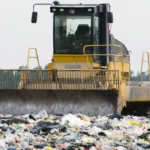
The drive toward energy-from-waste projects is fueled by a critical waste management bottleneck facing Greater Sydney, where existing landfill capacity is expected to be completely exhausted by 2030. Advocates argue that thermal treatment technology provides a vital option to divert rubbish away from traditional landfills.
The scoping report for the proposed $1 billion Parkes Energy Recovery facility in the NSW Central West was published by the NSW Planning Department. If granted planning approval, the facility would possess the infrastructure to process 732,000 tonnes of household and industrial rubbish annually via thermal treatment. Nearly all of this waste would be transported by rail from Sydney over hundreds of kilometres to Parkes, generating up to 80 megawatts of base load power daily.
Addressing the environmental footprint of long-distance transport, Nichole Overall noted:
“Waste is best managed as close to its source as possible. Transporting hundreds of thousands of tonnes of metropolitan waste to regional facilities, hundreds of kilometres away adds to cost, emissions and impacts”.
In a separate development, waste management firm Veolia has proposed processing 380,000 tonnes of non-recyclable Sydney waste annually at its existing Woodlawn site near Tarago. If approved by the NSW Planning Department, the facility would produce enough electricity to power up to 40,000 homes.The proposal currently awaits a formal response to submissions from Veolia.
How Have Local Residents and Project Proponents Responded to the Recommendations?
The parliamentary committee received more than 1,400 formal submissions, with the overwhelming majority expressing firm opposition to the technology’s expansion into regional areas.
Welcoming the parliamentary inquiry’s findings, Parkes resident Erik Lensson stated:
“It is entirely unsuitable. Burning red bin waste from the big city and throwing it over the fence to the countryside is just a total cop out”.
Conversely, project proponents argued that energy-from-waste technology represents a proven global solution.
In an official statement, Parkes Energy Recovery director Ed Nicholas stated:
“It’s a pity that the inquiry wasn’t able to visit an operating facility as part of their investigation. Had they done so, they would have seen for themselves how best-practice facilities, such as the one we are proposing for Parkes, work in both rural and urban areas to strict environmental standards. We are committed to listening to feedback … and demonstrating the real benefits this project can bring at every stage”.
Veolia was also contacted for comment regarding the committee’s report.
What Specific Policy Recommendations Did the Select Committee Propose?
In addition to recommending the rejection of the Parkes and Tarago proposals, the committee advised a statewide moratorium on all waste-to-energy proposals alongside an independent review of the four designated regional precincts. The inquiry further recommended enforcing strict minimum buffer zones to maintain safe distances between facilities and food production areas, schools, and hospitals.
Outlining concerns over how community outreach was conducted, Nichole Overall stated:
“Those supportive of the proposed thermal waste-to-energy technology provided information and examples of its safe operation … and outlined commitments to stringent best practice regulation. The committee is concerned with the expectation for proponents to be the ones ultimately responsible for engagement, dissemination or information and consultation”.
However, the findings revealed political division within the committee. Labor MLC and committee member Emily Suvaal dissented against key recommendations.
Expressing concern over the proposed halt, Emily Suvaal stated:
“A moratorium on energy-from-waste is not possible without viable alternatives in place. The technology can be safe when managed with strong guidelines and standards, as it is in NSW and globally”.
The NSW government, including Energy Minister Penny Sharpe, is required to formally respond to the inquiry’s 22 recommendations by 20 January 2027.
What Is the Background of the Energy-from-Waste Debate in New South Wales?
The energy-from-waste debate in New South Wales has intensified over recent years as metropolitan landfills near full capacity. In response to growing environmental and public health concerns raised by urban communities in Western Sydney, the NSW EPA instituted strict location restrictions limiting thermal waste-to-energy facilities to four regional industrial precincts.
However, this policy shift sparked opposition from regional councils, agricultural groups, and rural residents who argued that transporting millions of tonnes of city garbage into regional NSW unfairly burdened rural communities. In August 2025, the NSW Parliament established the Select Committee on Proposed Energy from Waste Facilities to investigate the environmental, health, economic, and social impacts of thermal waste processing.
How Will This Development Affect Regional Communities and Waste Management Developers?
The inquiry’s recommendations carry significant implications for several key stakeholder groups:
- For Regional Communities and Local Farmers: The proposed moratorium and minimum buffer zone recommendations offer temporary relief to residents, agricultural producers, and local councils in Parkes and Goulburn Mulwaree. If adopted by the government, these measures would protect agricultural land, local drinking water catchments, and regional air quality from potential emissions.
- For Waste Management Developers and Energy Proponents: Commercial entities such as Veolia and Parkes Energy Recovery face regulatory uncertainty and potential project delays or cancellations. Capital investments exceeding $1 billion may remain stalled pending the state government’s decision in early 2027.
- For Greater Sydney Local Councils and State Planners:Rejection of regional incineration facilities leaves Sydney facing an impending waste crisis as existing landfills near capacity by 2030. State planners and local councils will be forced to rapidly explore alternative waste diversion methods, including expanded organic recycling, advanced material recovery, and increased local landfill infrastructure.