Key Points
- Southwest Metro Launch: Following a two-year wait, Sydney’s Southwest Metro driverless rail service officially opened to the public, with the first automated train departing Bankstown Station at 4.31am.
- Massive Infrastructure Upgrade: The project involved converting a 130-year-old heavy rail line and 10 heritage stations, installing automated glass platform doors, and upgrading railway tracks.
- Budget Overruns and Delays: Completed a year later than forecast, the total cost for the combined city and southwest Metro lines ballooned from an initial $11.5 billion estimate to $23 billion.
- Increased Frequency and Capacity: Services will run every four minutes during weekday peak hours, boosting passenger transit capacity across the corridor by 50 per cent.
- Melbourne Metro Expansion: Simultaneously, Melbourne opened the new Federation Square entrance at Town Hall Station, a key Metro Tunnel facility that has recorded 7.7 million passenger journeys since late 2025.
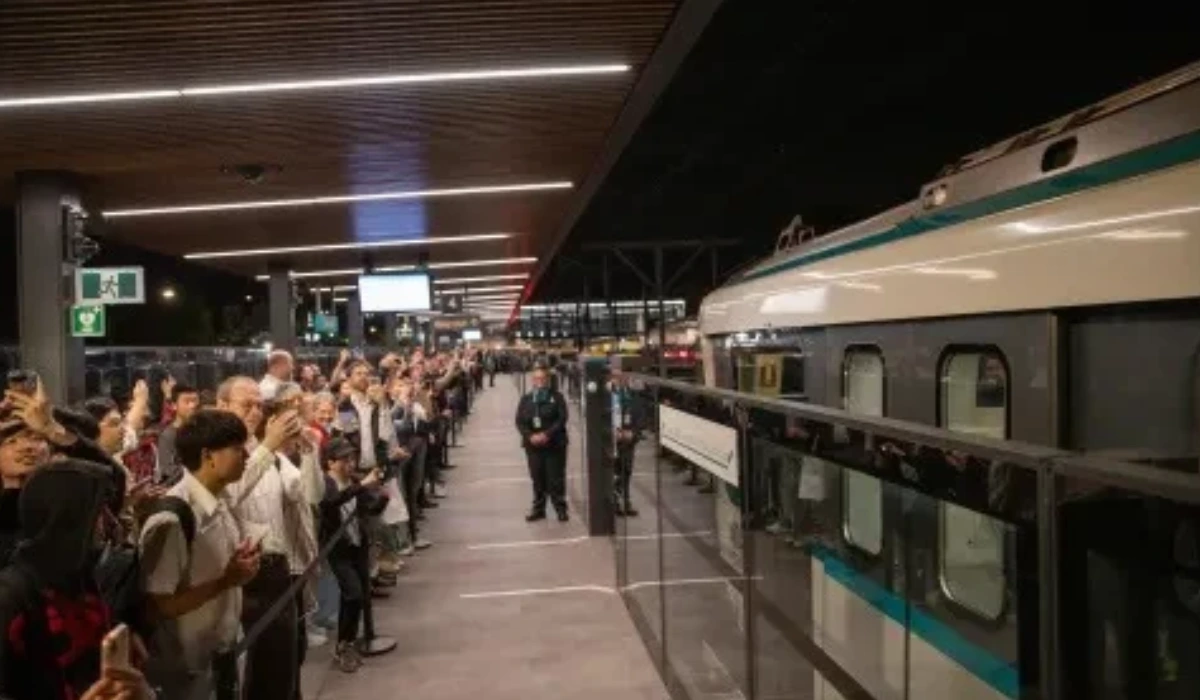
Sydney (Sydney Now Magazine) October 30, 2026 – Sydney’s Southwest Metro has officially commenced passenger operations after two years of major network disruption, ushering in automated rapid transit between Bankstown and the city centre. As reported by Australian transport journalists covering the historic launch, the first driverless train departed Bankstown Station at 4.31am on Friday, carrying hundreds of early-morning commuters across the newly upgraded corridor. The milestone marks the end of extensive trackwork and station overhauls along the former T3 heavy rail line.
- Key Points
- What Services and Frequencies Can Sydney Commuters Expect on the Southwest Metro?
- How Did Costs and Timelines Escalate During the Construction of Sydney’s Metro?
- What Does the Federation Square Entrance Opening Mean for Melbourne’s Rail Passengers?
- Background of the Particular Development After the News
- How This Development Can Affect Southwestern Sydney Residents, Local Businesses, and Commuters
Addressing the public during the official opening ceremonies, New South Wales Premier Chris Minns praised the community’s patience during the construction phase. As reported by regional correspondents, Premier Chris Minns stated that “Finally the wait for the Metro is over,” adding, “I want to thank the commuters, local businesses and families who have been exceptionally patient as this massive project to convert the heavy rail line was undertaken”. The project saw the conversion of 10 heritage stations along the route, equipped with automated glass screen platform doors and modernized track infrastructure.
The project faced significant delays and budget blowouts prior to its completion. Delivering the infrastructure took a year longer than original forecasts, while total costs for the combined City and Southwest Metro lines surged to $23 billion from an initial estimate of approximately $11.5 billion. Member for Bankstown Jihad Dib, who cut the ribbon to formally open the Southwest Metro, expressed community enthusiasm, stating: “The people of the Bankstown electorate are so excited that this day is here. This is a massive day for our community and all of Sydney.”
Under the new operational schedule, commuters will benefit from turn-up-and-go services arriving every four minutes during weekday peak times, every five minutes off-peak, and every 10 minutes during evenings and weekends. Transport officials confirm the upgraded line increases total passenger capacity by 50 per cent. Member for Canterbury Sophie Cotsis highlighted the relief felt by local traders as temporary pink replacement buses are phased out, noting that “I’ve been talking to local businesses and they’re looking forward to finally having the roads clear of the pink buses”. Cotsis added that “People across the inner south-west now have fast, direct access to central and northern Sydney opening up job opportunities and connecting people to education, sport, health and tourism like never before”.
Concurrently, public transport infrastructure in Victoria recorded its own milestone as Melbourne opened the Town Hall Station Metro Tunnel entrance at Federation Square on Thursday. Town Hall Station has established itself as one of the network’s core hubs, recording 7.7 million journeys since opening in November last year. Speaking on the network expansion, Victorian Public Transport Minister Vicki Ward stated: “This spectacular new entrance will better connect passengers to Federation Square, the Melbourne Arts Precinct and the MCG”. Ward further noted that by adding more than 1,200 extra services every week, “the Metro Tunnel has changed the way people move across Melbourne”.
What Services and Frequencies Can Sydney Commuters Expect on the Southwest Metro?
The newly opened Southwest Metro line operates on a high-frequency, turn-up-and-go timetable designed to eliminate the need for fixed departure schedules. Commuters traveling on the Bankstown corridor can access automated trains every four minutes during morning and evening weekday peak hours. During off-peak daytime hours, trains run at five-minute intervals, while evening and weekend services operate at ten-minute frequencies.
The transition from traditional driverless rolling stock on converted tracks expands passenger carrying capacity by 50 per cent compared to former heavy rail operations. In addition to increased capacity, the installation of mechanical gap-fillers and platform screen doors at 10 historic heritage stations along the line ensures step-free boarding and improved platform safety for passengers.
How Did Costs and Timelines Escalate During the Construction of Sydney’s Metro?
Converting a 130-year-old operating heavy rail network into a fully automated driverless system posed substantial engineering challenges. Originally slated for earlier completion, construction overruns pushed the final opening date back by one full year beyond initial projections.
Financially, the City and Southwest Metro developments experienced substantial budget expansion. Initial cost estimates for the integrated rail lines were pegged at approximately $11.5 billion. However, complex station retrofitting across heritage sites, underground tunneling through dense urban environments, and extensive signal upgrades caused total expenditures to reach $23 billion upon project delivery.
What Does the Federation Square Entrance Opening Mean for Melbourne’s Rail Passengers?
In Victoria, the opening of the Town Hall Station entrance at Federation Square completes a vital pedestrian link for Melbourne’s Metro Tunnel network. Town Hall Station serves as a central interchange point, absorbing 7.7 million passenger journeys since its initial opening.
The new street-level access point at Federation Square provides direct pedestrian connections to key cultural, artistic, and sporting precincts, including the Melbourne Arts Precinct, the Australian Centre for the Moving Image (ACMI), and nearby venues such as the Melbourne Cricket Ground (MCG). Network-wide, the Metro Tunnel project has introduced over 1,200 additional weekly rail services, unburdening the traditional City Loop system.
Background of the Particular Development After the News
The opening of Sydney’s Southwest Metro line represents the completion of a major phase in New South Wales’ long-term public transport strategy. Conceived over a decade ago under the former state government, the conversion of the T3 Bankstown Line to driverless metro standards faced political debate and operational hurdles. During construction, thousands of daily commuters relied on temporary “pink bus” replacement fleets, leading to localized road congestion across inner southwest suburbs like Campsie, Canterbury, and Bankstown.
In Victoria, the Metro Tunnel project similarly represents a transformative multi-billion-dollar overhaul of Melbourne’s rail network. The underground tunnel bypasses the existing City Loop to directly connect the Sunbury line with the Cranbourne and Pakenham lines, creating dedicated high-capacity rail corridors. The step-by-step opening of key urban access portals, such as the Town Hall Station entry at Federation Square, completes planned civic integration across the city centre.
How This Development Can Affect Southwestern Sydney Residents, Local Businesses, and Commuters
The commissioning of the Southwest Metro line and expanding Melbourne rail infrastructure is expected to produce noticeable long-term impacts across multiple stakeholder groups:
1. For Local Residents and Daily Commuters
- Reduced Travel Times: Suburb-to-city travel times will decrease, providing residents in Bankstown, Lakemba, and Canterbury with direct, high-frequency transit into Sydney’s Central Business District, North Sydney, and the northwest employment hubs.
- Improved Station Accessibility: Retrofitted heritage stations with level boarding and platform screen doors will significantly ease travel for passengers with mobility needs, families with prams, and elderly commuters.
2. For Local Businesses and Suburban Town Centres
- Relief from Traffic Congestion: Phasing out the pink replacement buses will reduce road traffic along main arterial roads, smoothing commercial transport and customer access in suburban commercial strips.
- Increased Foot Traffic: High-frequency, turn-up-and-go metro services will attract greater patronage to suburban dining, retail, and service precincts surrounding major southwest stations.
3. For Urban Planning and Commercial Property Markets
- Accelerated Housing and Transit-Oriented Development: Enhanced transit connectivity is likely to spur residential and commercial high-density development along the Bankstown-to-Sydenham corridor.
- Broader Economic Integration: Direct public transport access between Sydney’s southwest and major employment, educational, and medical hubs will expand job markets and educational choices for local residents.