Key Points
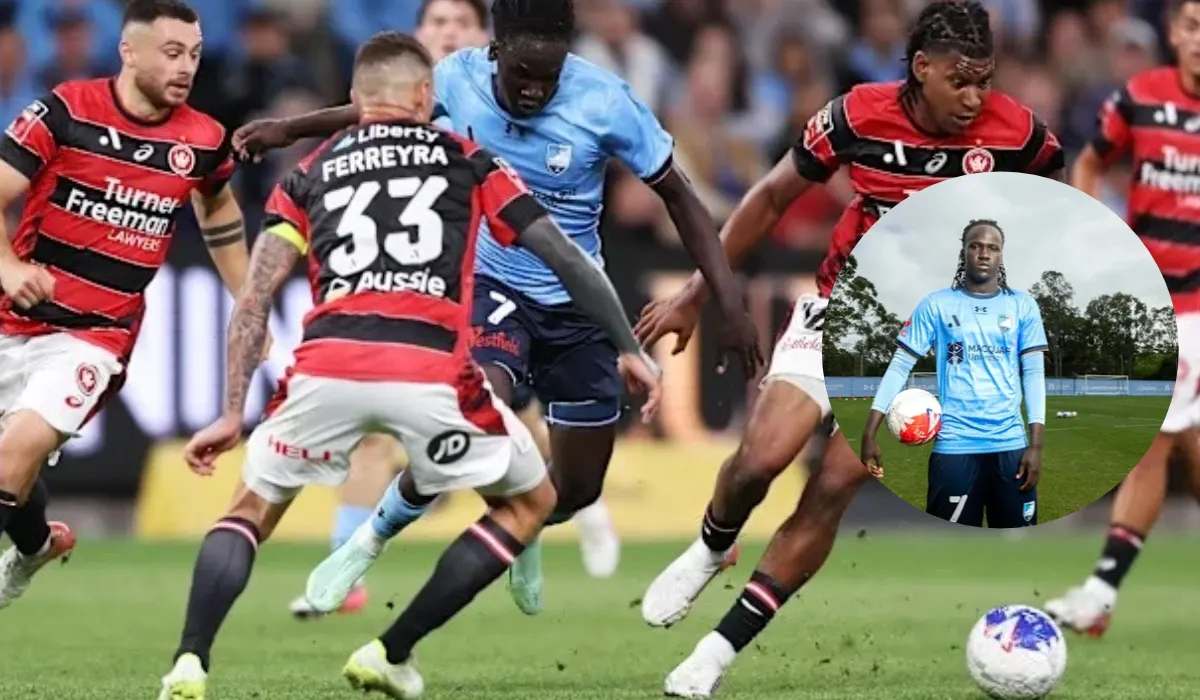
- World Cup Release Blocked: Sydney FC have officially exercised their right to refuse the release of 17-year-old star winger Akol Akon for Australia’s upcoming FIFA U-17 World Cup campaign in Qatar.
- Absence of Binding Agreement: Because the FIFA U-17 World Cup falls outside an official FIFA international window and the prior mandatory release agreement between Football Australia and the Australian Professional Leagues (APL) has lapsed, clubs hold full autonomy regarding player release.
- Senior First-Team Status: Unlike other academy players released for the tournament, Akon is an established senior starter under head coach Patrick Kisnorbo and has already been sold to Major League Soccer (MLS) club Colorado Rapids in a record deal.
- Broadening International Horizons: Akon has already breached higher representative tiers, having represented the Olyroos (Australia U-23) and earned consideration on senior Socceroos longlists under head coach Tony Popovic.
- Signs of Ecosystem Maturity: While generating public debate, the club-versus-country tension illustrates that A-League clubs are successfully establishing a viable youth development model centered on senior playing time and transfer market valuation.
SYDNEY (Sydney Now Magazine) October 21, 2026 – A high-profile club-versus-country dispute has erupted in Australian football after Sydney FC elected to withhold 17-year-old attacking sensation Akol Akon from participating in next month’s FIFA U-17 World Cup in Qatar. The decision by the Sky Blues to prioritize domestic A-League commitments over youth international selection has sparked intense commentary across the domestic sport. However, football analysts and industry observers view the stand-off not as a sign of institutional dysfunction, but as a tangible marker of maturity for the A-League’s evolving business and talent development framework.
- Why Has Sydney FC Refused to Release Akol Akon for Australia’s FIFA U-17 World Cup Campaign?
- Is Sydney FC’s Stance a Sign of Systemic Progress in Australian Football?
- How Far Has Akol Akon Advanced Beyond Youth Representative Football?
- What Steps Must Football Australia and the APL Take to Resolve Future Conflicts?
- Background of the Particular Development
- Prediction: How This Development Can Affect Australian Clubs, Young Players, and National Teams
Why Has Sydney FC Refused to Release Akol Akon for Australia’s FIFA U-17 World Cup Campaign?
As reported by sports journalists analyzing the domestic football landscape, Sydney FC have made the strategic decision to block winger Akol Akon from joining the Joeys—Australia’s national under-17 squad—ahead of the FIFA U-17 World Cup kicking off in Qatar on 19 November. The decision centers primarily on Akon’s elevated role as a primary, first-team contributor for Sydney FC in the A-League Men competition.
The regulatory backdrop permits Sydney FC to take this stance because youth World Cups are staged outside designated FIFA international match windows. While Football Australia (FA) and the Australian Professional Leagues (APL) previously operated under a binding covenant requiring domestic clubs to release eligible players for junior national duty, that formal agreement has since expired. Consequently, Australian clubs retain full discretionary authority over whether to release contracted personnel.
Industry observers note that withholding elite teenagers from junior international tournaments is standard practice across major global leagues. European and South American clubs routinely retain high-value teenagers who have established themselves in senior starting line-ups, arguing that competitive first-team minutes offer greater developmental value than age-grade tournaments.
Is Sydney FC’s Stance a Sign of Systemic Progress in Australian Football?
As reported by football commentators reviewing the dispute, framing Sydney FC as a self-interested party acting against the broader national interest overlooks a crucial structural shift within the domestic game. For over a decade, Australian football administrators, media, and supporters have urged A-League franchises to transition away from short-term rosters and construct sustainable business models based on youth academy pathways and transfer revenue generation.
The tension over Akon serves as direct evidence that this developmental framework is yielding results. Akon is not a developmental prospect seeking exposure; Sydney FC have already negotiated his transfer to Major League Soccer club Colorado Rapids in a record-setting multi-million-dollar deal. Upon announcing the acquisition, Colorado Rapids executives highlighted Akon’s “uncommon physical and competitive maturity,” validating his standing as a proven senior performer rather than a junior prospect requiring a talent showcase in Qatar.
Furthermore, Sydney FC have not instituted a blanket veto on international duty. The club released multiple academy products to represent Australia at the U-17 World Cup. The distinction remains that those players are not essential starters in Patrick Kisnorbo’s immediate A-League matchday squad, allowing the club to accommodate their absence without compromising domestic performance.
How Far Has Akol Akon Advanced Beyond Youth Representative Football?
As reported by news outlets tracking national team selections, 17-year-old Akol Akon has progressed rapidly through Australia’s representative tiers. Despite his age, Akon has already bypassed standard age-group progressions to earn selection for the Olyroos—Australia’s national under-23 team.
Sources close to national team operations confirm that Akon was also placed on Socceroos head coach Tony Popovic’s extended longlist for senior international friendlies against Brazil. With Australia preparing for final friendly fixtures ahead of the upcoming Asian Cup campaign, Akon remains under active consideration for senior national team selection.
Given that Akon is already knocking on the door of the senior Socceroos squad, sports analysts argue that retaining him in Sydney to maintain a consistent competitive rhythm in senior football serves his long-term trajectory far more effectively than returning to under-17 football.
What Steps Must Football Australia and the APL Take to Resolve Future Conflicts?
As reported by journalists covering football administration, the annualization of the FIFA U-17 World Cup ensures that release conflicts will recur continuously unless a formal governance agreement is established. Football Australia and the APL face immediate pressure to negotiate an updated policy that balances national team ambitions with club investments.
Administrative experts note that any new accord must reflect the commercial realities of modern A-League clubs. Contemporary Australian clubs depend heavily on young assets to drive on-field results and generate crucial transfer capital. If Football Australia seeks guaranteed access to top-tier talent for non-window tournaments, administrators must offer structural concessions, potential financial compensation, or schedule adjustments to mitigate the competitive penalty borne by domestic clubs.
For Sydney FC head coach Patrick Kisnorbo, the club’s administrative stance creates immediate tactical accountability. If Akon is retained domestically but receives restricted or sporadic playing time during the period he would have spent in Qatar, the club’s developmental justification will face heightened scrutiny from media and fans alike.
Background of the Particular Development
The governance framework of Australian football underwent a structural shift in December 2020, when the Australian Professional Leagues (APL) formally unbundled from Football Australia (FA). The unbundling granted the A-League Men and A-League Women operational independence, transferring commercial and fixture control to the private clubs while FA retained regulatory oversight and jurisdiction over national representative teams.
During the initial transition, temporary operational agreements ensured that A-League clubs released players for junior national team camps and tournaments, including AFC youth qualifiers and FIFA U-17 and U-20 World Cups. However, as those agreements lapsed without immediate renewal, individual clubs gained the legal discretion enjoyed by international teams under FIFA statutes. This regulatory shift coincided with a deliberate pivot by A-League ownership groups toward youth development, spurred by lucrative domestic transfers to European, Asian, and North American leagues.
Prediction: How This Development Can Affect Australian Clubs, Young Players, and National Teams
The standoff between Sydney FC and Football Australia over Akol Akon will shape domestic squad management, transfer market dynamics, and national team pathways across several distinct fronts:
- For A-League Clubs and Youth Academies: Domestic clubs will increasingly assert legal autonomy regarding player management. Armed with the precedent set by Sydney FC, clubs will routinely retain top-tier teenage starters for domestic fixtures, reserving national team releases primarily for players who are not integral to senior weekly operations or whose transfer value requires international exposure.
- For Emerging Australian Teenagers: Developing players will navigate a more complex professional landscape where club career progression and national team aspirations occasionally diverge. While missing a junior World Cup represents a immediate sacrifice for a young athlete, establishing a consistent starting spot in senior football and securing overseas transfers will increasingly take priority for elite prospects aiming directly for the senior Socceroos.
- For Football Australia and National Team Coaches: National team selectors for the Joeys and Young Socceroos will be forced to adapt to roster fluidities similar to those faced by European nations. Head coaches must build deeper national talent pools and prepare for major junior tournaments without relying on elite prospects who have already broken into senior first-team football. Concurrently, FA leadership will be incentivized to fast-track negotiations with the APL to establish clear, mutually beneficial guidelines for future international releases.