Key Points
- Maroubra Beach and Coogee Beach in Sydney’s Eastern Suburbs have been closed until further notice following the discovery of a dead whale off Lurline Bay.
- Randwick City Council issued an official notice confirming that the closure was enacted as a safety precaution while lifeguards monitor the scene and liaise with relevant authorities.
- Maritime research from Southern Cross University and expert commentary from whale scientist Dr Vanessa Pirotta highlight that decomposing whale carcasses release oils that attract apex predators, such as sharks, posing a heightened risk to swimmers and surfers.
- While initial council statements described the marine mammal as a baby whale, whale scientist Dr Vanessa Pirotta noted the remains are more likely those of a young adult or teenage humpback whale.
- Authorities identified a rope entangled around one of the whale’s pectoral fins, whilst highlighting that the carcass is situated in a hard-to-access rock ledge area, complicating retrieval efforts.
- Randwick City Council, led by Mayor Dr Clare Willington, is collaborating with the NSW Department of Primary Industries and the La Perouse-based Gamay Rangers to ensure culturally respectful handling of the animal, which serves as a vital totem to the local Bidjigal people.
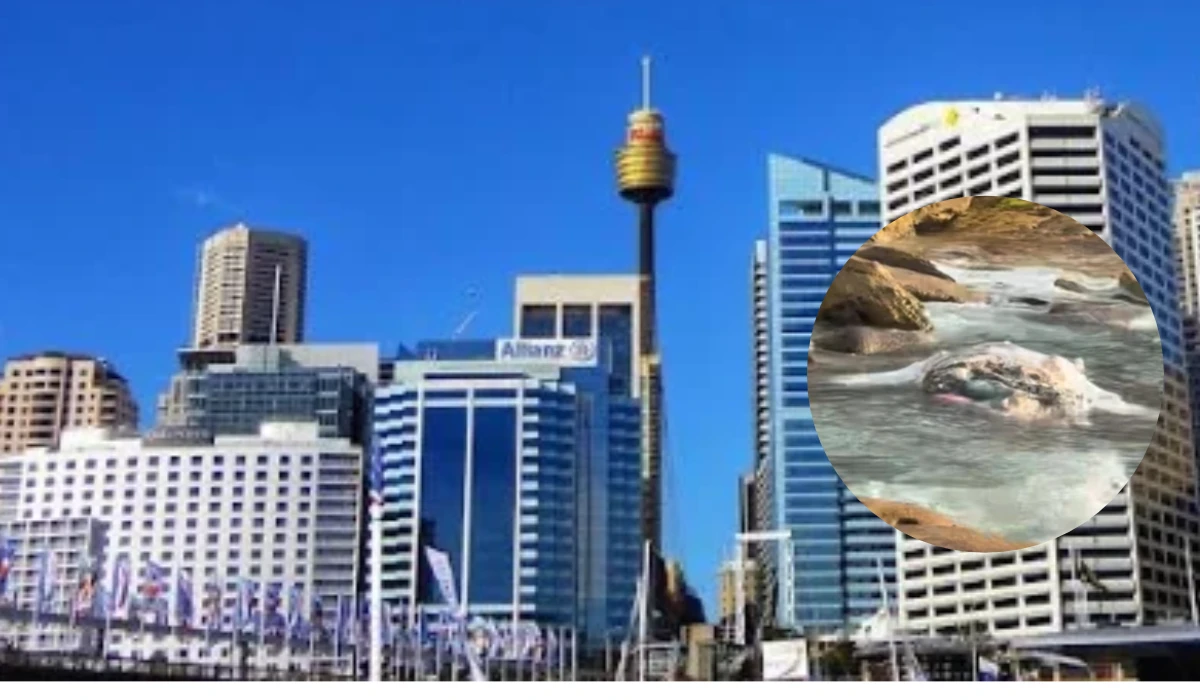
SYDNEY (Sydney Now Magazine) October 22, 2026 – Local council authorities in Sydney have ordered the immediate shutdown of two major coastal hotspots, Maroubra Beach and Coogee Beach, after a decomposing whale carcass was spotted floating in the surf near Lurline Bay. The precautionary closure was enacted on Thursday morning following warnings that the marine remains could lure apex marine predators, specifically sharks, into shallow recreational swimming zones. Municipal lifeguards, coastal emergency services, and environmental agencies have established a perimeter along the shoreline while monitoring ocean currents and formulating plans for the carcass’s safe extraction or natural dispersal.
- Key Points
- What Caused the Precautionary Closure of Coogee and Maroubra Beaches?
- How Are Local Authorities and Indigenous Leaders Managing the Whale Carcass Removal?
- What is the Background of This Particular Development?
- What is the Prediction for How This Development Will Affect Coastal Communities and Water Users?
In an official public announcement, Randwick City Council stated: “Maroubra and Coogee Beaches closed until further notice. A baby whale carcass has been spotted this morning floating off Lurline Bay. As a precaution, Maroubra and Coogee Beaches will remain closed until further notice while lifeguards monitor the situation and work with local stakeholders and authorities to arrange the whale’s removal.”
What Caused the Precautionary Closure of Coogee and Maroubra Beaches?
The primary driver behind the municipal emergency response is the significant biosecurity and marine safety hazard posed by floating whale remains. According to scientific research conducted by Southern Cross University, decaying whale blubber exudes dense organic fats and slicks that travel vast distances across ocean currents, acting as a potent attractant for major shark species, including tiger sharks and great whites.
Addressing the immediate hazard, prominent marine scientist Dr Vanessa Pirotta advised the public to strictly avoid entering the water along Sydney’s eastern littoral zone. As reported by local media outlets covering the incident, Dr Pirotta noted that while Randwick Council initially identified the marine mammal as a baby whale, visual assessments indicate the carcass is more likely that of a young adult or adolescent humpback whale. Observers at the scene also reported foreign material, specifically a rope, tangled around one of the animal’s pectoral fins, raising questions regarding potential entanglements prior to its death.
How Are Local Authorities and Indigenous Leaders Managing the Whale Carcass Removal?
Retrieval operations face severe logistical hurdles due to the harsh coastal geography surrounding Lurline Bay. As reported by 7News, Randwick City Council highlighted that the carcass washed up in a highly hazardous, restricted location surrounded by steep cliffs and sharp rock ledges.
Speaking on behalf of the local Indigenous ranger group based at La Perouse, Rob Cooley of the Gamay Rangers stated that retrieval remains exceptionally difficult because ocean conditions constrain heavy machinery and marine vessels, compounded by the carcass being in an advanced state of decomposition.
Randwick City Council Mayor Dr Clare Willington emphasised that public safety and cultural heritage remain the administration’s primary operational pillars. As reported by 7News, Mayor Willington stated: “We’re working with the Gamay Rangers and NSW Department of Primary Industries on how to manage this incident safely and be culturally respectful. The whale is an important totem animal to the local Bidjigal people.” Mayor Willington added that the death of a whale is a “natural occurrence and in time nature will deal with the carcass,” confirming that council’s immediate focus is limiting risks to surfers and beachgoers.
What is the Background of This Particular Development?
The unexpected arrival of a decaying whale carcass along Sydney’s densely populated Eastern Suburbs comes during the annual peak migration season for humpback whales along the eastern coast of Australia. Hundreds of humpbacks traverse the marine corridor known colloquially as the “Humpback Highway” as they return south towards Antarctic feeding grounds with young calves.
This incident marks the latest in a series of similar marine strandings along New South Wales shorelines over recent months. In July 2026, a juvenile humpback calf washed ashore at Greenhills Beach in Sydney’s Sutherland Shire, triggering biosecurity testing for avian influenza (H5N1), which subsequently returned negative results. Earlier in April, several coastal beaches within the Royal National Park were cordoned off for multiple days after a decomposing carcass stranded on the rocks at Era Beach, attracting noticeable shark activity to the immediate surf line.
Furthermore, shark mitigation and beach closures remain sensitive topics across Sydney’s coastline. Earlier during the same week as the Lurline Bay sighting, a tiger shark was caught and subsequently died in protective sea nets off nearby Bondi Beach. While the NSW Department of Primary Industries monitors shark movements through smart drumlines and aerial drone surveillance, the physical presence of thousands of kilograms of decaying cetacean blubber presents an unmanageable risk that overrides traditional netting protections, necessitating complete beach shutdowns.
What is the Prediction for How This Development Will Affect Coastal Communities and Water Users?
The temporary shutdown of Maroubra and Coogee beaches will have immediate administrative, economic, and recreational ramifications for Sydney’s Eastern Suburbs. In the short term, beachgoers, local boardriders, and ocean swimming clubs will face restricted water access until authorities can either tow the remains out to open sea, allow natural tidal flushing to dislodge the carcass, or confirm that coastal shark activity indicators (via the state’s SharkSmart monitoring system) have returned to baseline safety levels.
For local businesses and hospitality venues situated along the Coogee and Maroubra beachfront strips, prolonged closures during warm spring weather could lead to temporary drops in foot traffic and tourism revenue. Furthermore, if Randwick City Council enacts full pedestrian closures along the rock shelf pathways and cliffside walking trails surrounding Lurline Bay to manage crowd control, local traffic congestion and parking constraints around coastal access points are expected to rise.
Over the medium to long term, this development will likely prompt calls for refined coastal emergency protocols regarding whale carcass management along urban rock shelves. As Australia’s humpback whale population continues its strong ecological recovery, interactions between migratory marine life, urban infrastructure, and recreational water users are predicted to increase. This trend will necessitate ongoing multi-agency collaboration between municipal councils, state fisheries departments, and traditional custodians to balance public safety with Indigenous cultural protocols during marine strandings.